
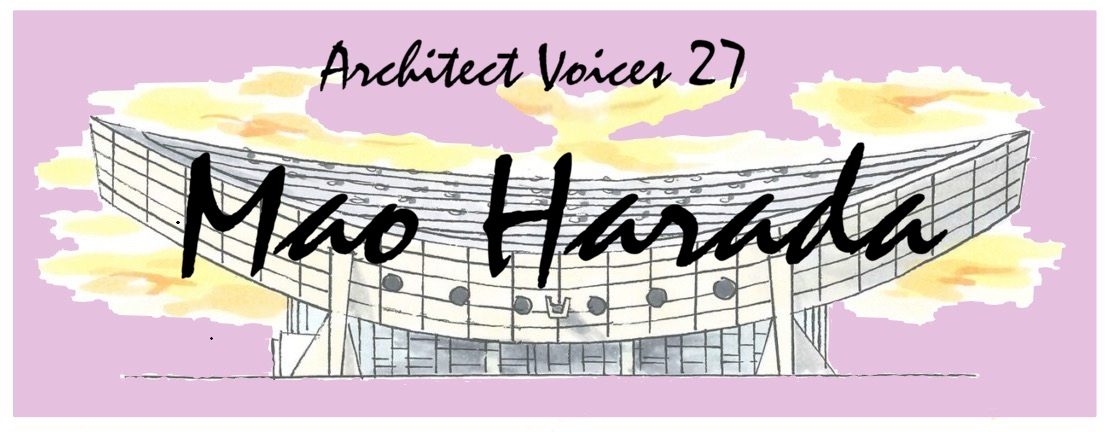

解体工事が進められていた「旧香川県立体育館」が、保存活用に向けての“最後のチャンス”を迎えています(詳細はこちらの記事を→https://bunganet.tokyo/kagawastop/)。この機に、BUNGA NETでは緊急連載「旧香川県立体育館に思う──アーキテクトボイス50」を行います(発起人:田根剛、佐々木睦朗、北山恒、宮沢洋)。この建築や今回の経緯への思いを、1日1組ずつアップしていきます。27人目は、MOUNT FUJI ARCHITECTS STUDIOの原田麻魚氏。パートナーの原田真宏氏のコメント(こちら)は見ずに書いたそうです。(ここまでBUNGA NET編集部)

旧香川県立体育館が多くの人々に愛され、愛着の対象となる固有の風景を地域に生み出しているのは間違いないと思う。個人的な出来事と建築が一体になった思い出も、地域の人々の胸の中にたくさん存在するだろう。だから多くの人は解体工事が始まって寂しく思ったのではないか。だけど新しい駅、新しい道、新しいスーパー、新しいマンションを得る片方で常に過去の形見を失い続ける経験の延長において、この、とびきりユニークな体育館が失われても「きっと大丈夫」、無理に存続させる為に迷惑やお金を掛けるほどのことではない。そんな風に受け止められているのではないかなと思っている。
 旧香川県立体育館(写真:原田麻魚)
だからこそ、解体工事が途中で止まったことに私はとても意義があると思っている。本当に失うかもしれない一歩手前の状態で真剣に「本当に大丈夫か」をみんなで確認できる機会ではないか。
つまり建築の価値がわかるのは建築業界の人だけではない。思い出や多くの写真をアーカイブしている地域の人々だけが知る価値もあるだろう。しかし「解体をしない可能性」という建築専門家の声は業界の外にはなかなか響かず、共感するのもまた専門家という閉ざされた状態にある。これは「地域の課題は(どこかの専門家ではなく)地域で決めるのだ」という県のメッセージに明確に反応できない構造的な問題による。地域の課題設定、そして解決策の決定に至るその道のりにおいて、同じ視座から可能性を吟味する立場において、私たちは機能する。都市計画的アプローチとは異なる、自らを地域の中に内在化させることでより深部から地域を思考するアプローチである。みんなにとって「誰かの決定」とならないように、専門家の決定でも行政の決定でもない合意形成を今からできないだろうか。合意形成のデザインも建築専門家は必要に応じて行なっているものであるが、この際誰が旗を振ってもいい、できるだけ多様な視点でまちの未来を考える機会にできないだろうか。
戦争の大きな喪失体験から、爆発するような創造的時代を経て今に至る曲がりくねった時代の流れの中で、いつの間にか都市環境が満たされたとしても、それでもう十分ということはない。恒常性という運動を続けるのが都市である。だからこそ、いつになっても創造的思考の責任を手放さずにまちの未来を描き続ける必要がある。大きい公共建築に限らずたとえ住宅一軒であっても、緩やかに変化するまちや地域を描く一筆一筆であるという事実を地域で受け止めてみるとき、「きっと大丈夫」ではいけなくなるのではないかと思う。それに、答えを急ぐ必要もよく考えたら必要なくなるかもしれない。結果は変わらないかもしれないが、決定のプロセスを相互対話型の開かれた場に移し、結論を急ぐことなくまちの未来を再考してみてはどうだろうか。合意形成に不可欠な手間と時間のかかるプロセスは、無形とはいえ、多くの近代建築の老朽化を同時期に迎える日本において、他の自治体にも広く共有される新たな財産となるだろう。
原田麻魚/建築家、MOUNT FUJI ARCHITECTS STUDIO
プロフィルはこちら→https://fuji-studio.jp/profile_E.html
 閉館間際(2014年9月の旧香川県立体育館のロビー(写真:宮沢洋、下の写真も)

There is no doubt in my mind that the former Kagawa Prefectural Gymnasium has been loved by many people, and that it has created a distinctive landscape in the local community to which people have developed a deep attachment. There must also be many memories among local people in which personal experiences have become inseparably intertwined with the building itself.
Perhaps this is why so many people felt a sense of sadness when demolition began. Yet, alongside gaining new stations, new roads, new supermarkets and new apartment buildings, we have continually experienced the loss of the physical remnants of the past. As an extension of that experience, perhaps people have come to feel that even if this exceptionally unique gymnasium were to disappear, “we’ll probably be fine”. Perhaps they feel that preserving it is not worth causing inconvenience or spending a substantial amount of money simply to keep it standing.
That is precisely why I believe there is great significance in the fact that the demolition work has been halted partway through. It may offer us an opportunity, just one step before we might truly lose the building, to stop and seriously ask ourselves together: “Are we really sure this is alright?”
In other words, recognising the value of architecture is not something limited to people in the architectural profession. Local people who have preserved memories and countless photographs may possess forms of knowledge about its value that no specialist can fully grasp.
Yet the voices of architectural professionals suggesting that there may be an alternative to demolition rarely reach beyond the profession itself, and those who sympathise with such views tend, once again, to be specialists. This is a structural problem: we have not yet found a way to respond clearly to the prefecture’s message that “local issues should be decided locally”, rather than by some outside expert.
In the process of defining a local issue and arriving at a decision about how it might be resolved, we can play a role by examining the possibilities from the same standpoint as the community itself. This is an approach different from that of conventional urban planning: by embedding ourselves within the community, we seek to think about the community from deeper within it.
Could we now create a process of consensus-building that does not become “someone else’s decision” for anyone involved — neither a decision imposed by experts nor one made solely by the administration? Architects already design processes for consensus-building when circumstances require it. But perhaps, on this occasion, it does not matter who takes the lead. Could this become an opportunity to think about the future of the city from as many different perspectives as possible?
Through the winding course of history — from the profound experience of loss brought about by war, through an era of explosive creativity, and into the present — we may eventually find ourselves living in an urban environment that appears complete. Yet that does not mean that we have reached a point where “enough is enough”. A city is an ongoing movement towards maintaining and renewing its equilibrium.
That is precisely why we must never relinquish our responsibility for creative thinking, and must continue to envision the future of our towns and cities.
Whether it is a large public building or something as small as a single house, each one is a stroke in the drawing of a town or community that changes gradually over time. If we begin to recognise this fact collectively, perhaps we can no longer simply say, “we’ll probably be fine”.
And perhaps, if we think about it carefully, there may be no need to rush towards an answer either. The outcome may not change. But why not move the decision-making process into an open space based on mutual dialogue, and reconsider the future of the town without rushing to a conclusion?
The time-consuming and painstaking process required to build consensus may be intangible, but in Japan — where many modern buildings will reach old age at roughly the same time — it could become a new form of shared public asset, one that can be widely passed on to other local authorities.
Mao Harada / Architect, MOUNT FUJI ARCHITECTS STUDIO
パートナーの原田真宏氏のコメントはこちら↓
Masahiro Harada/原田真宏/「わかりやすく伝えること」/旧香川県立体育館に思う26
一覧ページはこちら↓

WACOCA: People, Life, Style.