


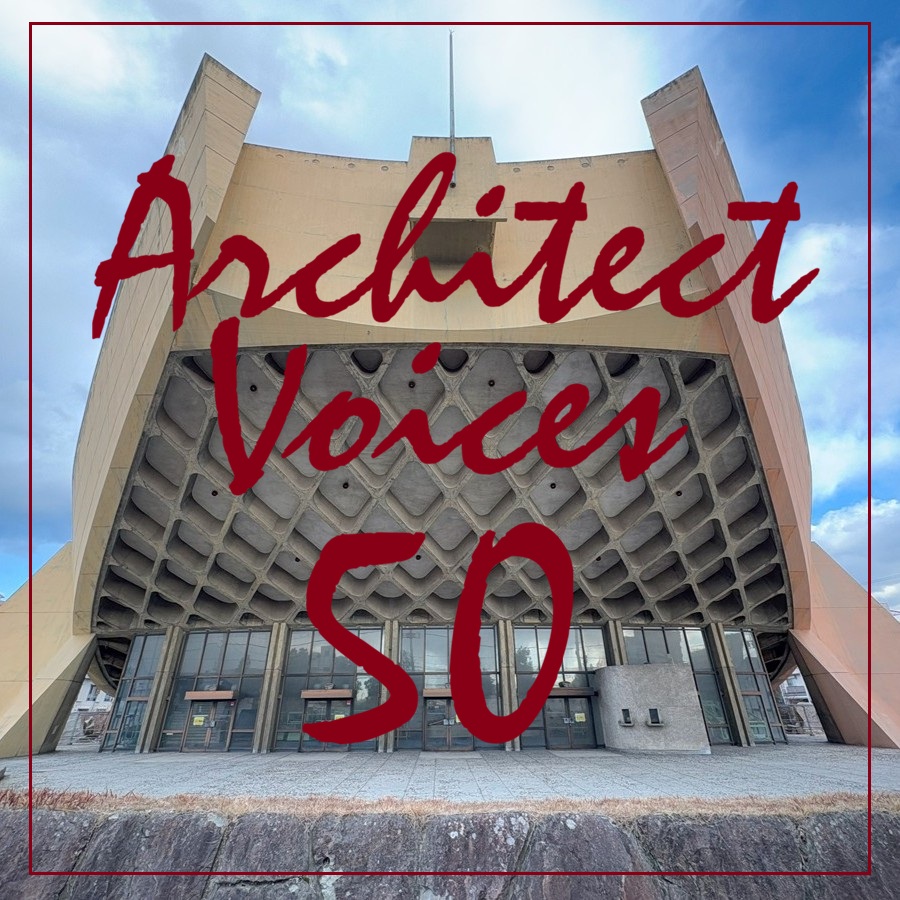
解体工事が進められていた「旧香川県立体育館」が、保存活用に向けての“最後のチャンス”を迎えています。再生を目指して香川県を提訴している「旧香川県立体育館再生委員会」の「証拠保全」の要請が認められ、「躯体解体」着手の手前で工事がいったんストップすることになりました(詳細はこちらの記事を→https://bunganet.tokyo/kagawastop/)。この機に、BUNGA NETでは緊急連載「旧香川県立体育館に思う──アーキテクトボイス50」を行います(発起人:田根剛、佐々木睦朗、北山恒、宮沢洋)。15人目は丹下健三氏の薫陶を受けた松岡拓公雄氏です。(ここまでBUNGA NET編集部)

丹下健三の建築は、建築家でなくとも目に留まり、記憶に残る。奇抜で特異だからではなく、独特の異彩を放っているからだろう。丹下健三という建築家の名前を知らなくとも、彼の建築の前に立てば、誰もがその建築の持つ力を感じるはずである。
5年前、元丹下健三の弟子たちであるアーキテクトファイブのパートナー、故・川村純一氏、堀越英嗣氏と私の3人で香川を訪れた。目的は、イサム・ノグチの片腕として活躍した石職人、故・和泉正敏氏へのインタビューだった。その折、話題になった旧香川県立体育館を再訪した。中に入ることはできなかったが、外観だけでも十分なインパクトがあった。反り返った屋根の毅然とした姿を、今でも目に焼き付けている。再利用の話もある一方で、やがて解体されるかもしれないと聞き、やり切れない気持ちになった。
同時期に完成した東京・代々木の国立屋内総合競技場と比較すると、その差は大きい。代々木の大きく弧を描く屋根は美しく、1964年の東京オリンピックから半世紀以上を経た今も、多くの人々に愛されている。オリンピックという時代の高揚を、建築の形にしたのが丹下健三だった。都心の公園の中にあるという立地のメリットもあり、その内部空間は現在もさまざまなイベントに対応し、活用されている。それに比べ、旧香川県立体育館は規模こそ小さいものの、その空間にはさまざまな活用の可能性があるように思える。しかし、現状は放置されたままである。
民間から再利用のための提案やアイデアが出されているにもかかわらず、自治体は明快でない「構造上の問題」を根拠として、前向きに活用しようとする姿勢は示していない。
こんな素晴らしい財産を持ちながら、その価値を十分に理解していないのではないか。なんとも、もったいない。寂しいことである。昔の金子知事のような人物が、今また現れないだろうかと、あらぬ期待をかけてしまう。存命中に金子知事から直接お聞きした、「私は政治も芸術だと思う」という一言を、今でも鮮明に覚えている。この建築は、戦後日本のモダニズム建築を代表する作品の一つであり、その時代そのものを表現した芸術作品でもある。
丹下健三の代表作をたどれば、戦後の広島平和記念公園・平和記念資料館から、香川県庁舎、代々木の国立屋内総合競技場、EXPO’70大阪万博の会場計画、そして東京都庁舎へと続いていく。常に、その時代のエポックをつくる建築を残してきた。私自身、東京都庁舎のコンペに至るまで約9年間、丹下健三に師事した。その中で感じたのは、丹下には常に、日本とその時代を背負いながら、未来を先取りしていこうとする一貫した思想があったということである。
現在は、時代が要請する複合的な建築が多くなっている。しかし、一つの建築が単体として強いメッセージを発することのできた時代があり、それが丹下健三の活躍した時代でもあった。旧香川県立体育館も、その一つに位置づけられる建築である。
評価にはさまざまな意見があるだろう。しかし、丹下健三は、その時代、その時代に力強い布石を残してきた。そして一つ一つの建築は、時間の中で連鎖しながら、彼の思想を形づくっている。旧香川県立体育館も、その連鎖の中にある重要な建築であり、丹下建築を理解するうえでの一つの要なのである。
丹下の建築は、常に「建築から都市へ」と、その役割を大きく示してきた。その価値は、建設された当初には見えなくても、時を経ることで、後から見えてくるものでもある。
日本を世界へと飛躍させた天才的な建築家、丹下健三の足跡は、できる限り残していきたいと思う。香川県には、香川県庁舎と旧香川県立体育館という、二つの貴重な宝物がある。その価値に気づき、ぜひ県民の皆さん、そして全国の人々にも自慢してほしい。それは、未来へ受け継ぐべき確かな公共の遺産なのだから。
私は、旧香川県立体育館再生委員会とともに、この建築を残し、活用していくための声を上げたい。この建築が失われることによる損失が、いかに大きいのか。自治体の皆さんには、ぜひ真剣に考えていただきたい。そして、市民からの要望や民間からの提案を真摯に受け止め、改めて再考してほしい。
そして今、まさにそのチャンスが訪れていると思う。
松岡拓公雄/建築家、アーキテクトシップLLC代表、滋賀県立大学名誉教授、元亜細亜大学都市創造学部長
プロフィルはこちら→http://www.architectship.jp/principal.html
 (写真:宮沢洋)
Kenzo Tange’s architecture catches the eye and leaves a lasting impression, even on those who are not architects. This is not because they are eccentric or peculiar, but rather because they radiate a unique brilliance. Even if one does not know the name Kenzo Tange, standing before one of his buildings, anyone would surely feel the power it possesses.
Five years ago, the three of us—the late Junichi Kawamura and Eiji Horikoshi, partners at Architect Five and former disciples of Kenzo Tange, and myself—visited Kagawa. Our purpose was to interview the late Masatoshi Izumi, a stonemason who had served as Isamu Noguchi’s right-hand man. On that occasion, we revisited the former Kagawa Prefectural Gymnasium, which had come up in conversation. Although we couldn’t go inside, the exterior alone made a powerful impression. The dignified silhouette of its arched roof remains etched in my memory to this day. While there is talk of repurposing the building, I felt a sense of helplessness upon hearing that it might eventually be demolished.
When compared to the National Indoor Stadium in Yoyogi, Tokyo—which was completed around the same time—the difference is striking. The Yoyogi stadium’s large, arched roof is beautiful, and even now, more than half a century after the 1964 Tokyo Olympics, it remains beloved by many people. It was Kenzo Tange who gave tangible form to the euphoria of that Olympic era through architecture. Thanks in part to its advantageous location within a downtown park, its interior space continues to be utilized for a variety of events. In contrast, although the former Kagawa Prefectural Gymnasium is smaller in scale, its space seems to hold great potential for diverse uses. Yet, it currently remains neglected.
Despite proposals and ideas for reuse coming from the private sector, the local government has not shown any willingness to actively utilize the facility, citing vague “structural issues” as justification.
Do they not fully understand the value of such a wonderful asset? It is such a waste. It is a sad state of affairs. I find myself harboring a vain hope that a figure like the late Governor Kaneko might appear again today. I still vividly remember the words I heard directly from Governor Kaneko during his lifetime: “I believe politics is also art.” This building is one of the representative works of postwar Japanese modernist architecture and is also a work of art that embodies that era itself.
Tracing Kenzo Tange’s masterpieces, we move from the postwar Hiroshima Peace Memorial Park and Peace Memorial Museum to the Kagawa Prefectural Government Building, the Yoyogi National Indoor Stadium, the site plan for EXPO ’70 in Osaka, and finally to the Tokyo Metropolitan Government Building. He consistently left behind architecture that defined the epoch of its time. I myself studied under Kenzo Tange for about nine years leading up to the competition for the Tokyo Metropolitan Government Building. During that time, I came to realize that Tange consistently held a philosophy of anticipating the future while bearing the weight of Japan and its era on his shoulders.
Today, there is an increasing demand for multifunctional buildings that meet the needs of the times. However, there was an era when a single building could convey a powerful message on its own—and that was the era in which Kenzo Tange was active. The former Kagawa Prefectural Gymnasium is one such building.
Opinions on its evaluation will likely vary. Nevertheless, Kenzo Tange left a powerful legacy, laying the groundwork for each successive era. Each of his buildings, linked together over time, gives shape to his philosophy. The former Kagawa Prefectural Gymnasium is an important building within that chain and serves as a key to understanding Tange’s architecture.
Tange’s architecture has consistently demonstrated its significant role in the transition “from architecture to the city.” While its value may not be apparent at the time of construction, it often becomes evident in retrospect as time passes.
I hope to preserve, as much as possible, the legacy of Kenzo Tange, the genius architect who propelled Japan onto the world stage. Kagawa Prefecture is home to two precious treasures: the Kagawa Prefectural Government Building and the former Kagawa Prefectural Gymnasium. I hope the residents of Kagawa Prefecture—and people across the nation—will recognize their value and take pride in them. After all, they are a solid public heritage that must be passed down to future generations.
Together with the Committee for the Revitalization of the Former Kagawa Prefectural Gymnasium, I wish to raise our voices to preserve and make effective use of these buildings. I urge local government officials to seriously consider just how great a loss it would be if these structures were to be lost. I also urge them to sincerely heed the requests from citizens and proposals from the private sector, and to reconsider the matter anew.
I believe that opportunity is presenting itself right now.
Takeo Matsuoka / Architect, Representative of Architectship LLC, Professor Emeritus at Shiga Prefectural University, Former Dean of the Faculty of Urban Creation at Asia University
一覧ページはこちら↓
WACOCA: People, Life, Style.