
# doglovers #dogs #Animals #pets
1. Bull Terrier
Then: A century ago, bull terriers had a more proportionate and angular head with a distinct break between the forehead and snout.
Now: Modern bull terriers are recognized by their “egg-shaped” head with a smooth curve from nose to skull and triangular, deep-set eyes.
Health Impact: Breeding for these exaggerated traits has contributed to common health issues, such as skin allergies and a higher prevalence of deafness (affecting about 20% of white bull terriers).
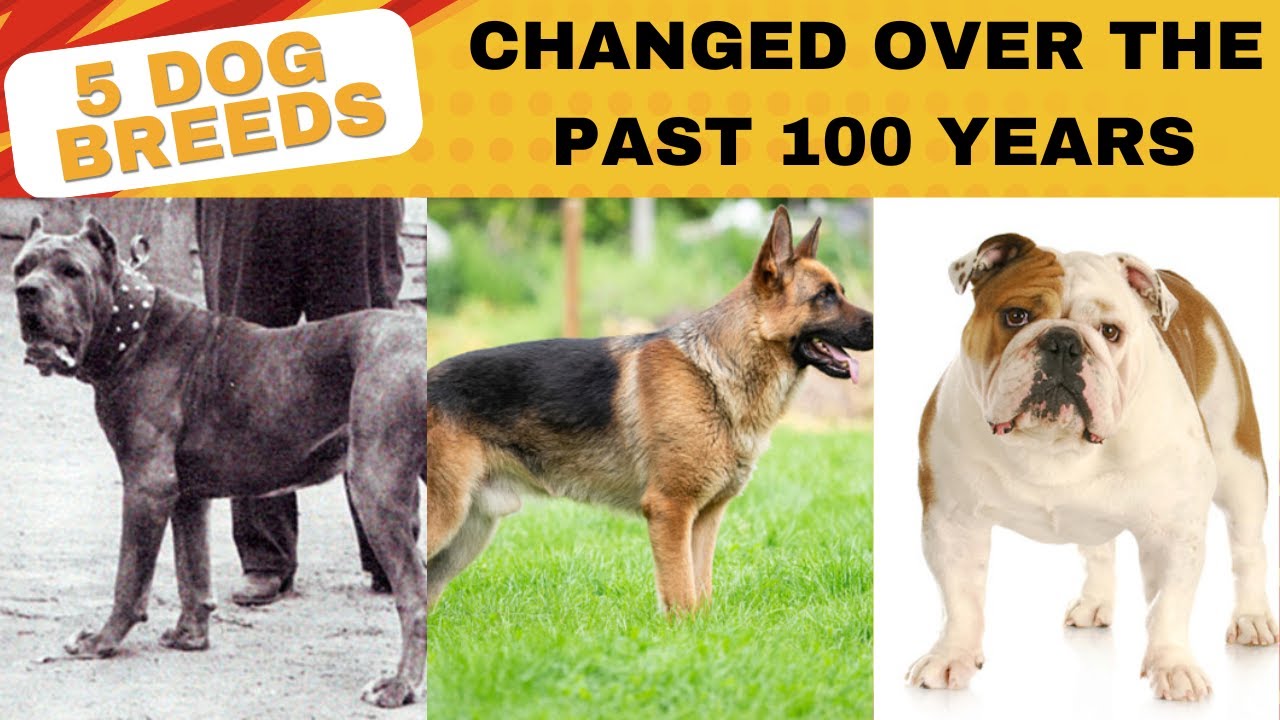
2. English Bulldog
Then: Earlier English bulldogs were leaner, more agile, and had fewer exaggerated features.
Now: Today’s bulldogs have become bulkier with heavily wrinkled faces, shorter snouts, and prominent jowls.
Health Impact: These changes have led to severe health issues, including breathing difficulties (due to brachycephalic skulls), skin infections, and joint problems. Their lifespan is now just over six years on average.
3. Pug
Then: Historically, pugs had longer snouts and better breathing capabilities.
Now: Modern pugs are bred for their flat faces and round heads, but this has drastically reduced their respiratory health.
Health Impact: The shortened snout causes brachycephalic obstructive airway syndrome, making it hard for pugs to breathe properly. They are also prone to overheating and eye issues.
4. German Shepherd
Then: Originally bred as lean, medium-sized herding dogs weighing around 50 pounds, early German shepherds were agile and strong.
Now: Modern German shepherds are larger, barrel-chested, and often bred with a sloping back to emphasize their posture.
Health Impact: These changes have led to musculoskeletal disorders, including hip and elbow dysplasia, and degenerative myelopathy, which can cause hind-leg paralysis. Their lifespan averages about 10 years.
5. Neapolitan Mastiff
Then: Early Neapolitan mastiffs were large but lacked the excessive skin folds and bulk seen today.
Now: Modern Neapolitan mastiffs are bred for their massive size and dramatic wrinkles, which give them a “bestial” appearance.
Health Impact: Their size predisposes them to hip dysplasia, heart issues, and bloat (gastric torsion), a potentially fatal condition.
Summary: Over the past 100 years, selective breeding has prioritized aesthetics and breed standards, often at the expense of canine health. While these changes have shaped our perception of “ideal” dog breeds, they underscore the importance of responsible breeding practices to protect the well-being of our four-legged friends.
Let me know if you’d like more details about specific breeds!