
Nioh 3 was provided by Koei Tecmo for review. Thank you!
I have a complicated feeling when it comes to Action RPGs/soulslikes. I enjoy them a lot, but I tend not be so good at them, and I take quite a while to complete. Still, I have a lot of fun, and of all the soulslikes out there, Nioh is one of my favorites. The fast pace of the combat and tons of loot we can find in a gorgeous Japan-inspired world have always been ones I enjoyed. So, with Nioh 3, I was so excited to get back into the series. However, what I found was probably one of the best soulslikes I have ever played, and the golden standard I will be comparing future ones to.
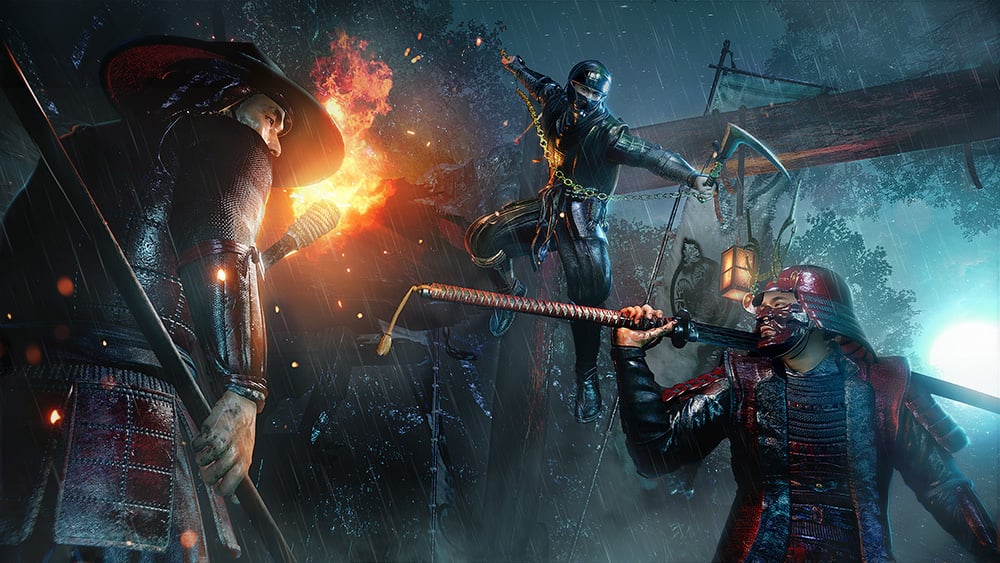
Nioh 3’s story starts off relatively interesting, and there is some uniqueness throughout that kept me curious, but it isn’t what I would consider a strong point. We play as Takechiyo, one of the grandsons of Ieyasu Tokugawa, who is set to inherit his grandfather’s shogun position. He has a rivalry with his brother, Kunimatsu, who also wants the position, and ultimately, we are sent back in time to defeat invading Yokai. I liked that we were going back through different periods of history to change destiny, but it never took me in as much as I hoped.
However, the rest of the game completely makes up for it. I don’t usually play the Nioh games for their stories, though I will give Nioh 3 the benefit of the doubt and say it was the most interesting to learn about.
Combat is outstanding and refined to a tee, to the point where every single fight, no matter how big or small, was exciting. The constant action of having to continually attack, dodge, and block incoming attacks all feels perfectly in sync with each other, with almost no room for any spots where it could feel stale. Nioh’s gameplay has always been a high point for me, and I love soulslikes that go all in with fast-paced action (like Sekiro), but Nioh 3 feels like a step above the rest.
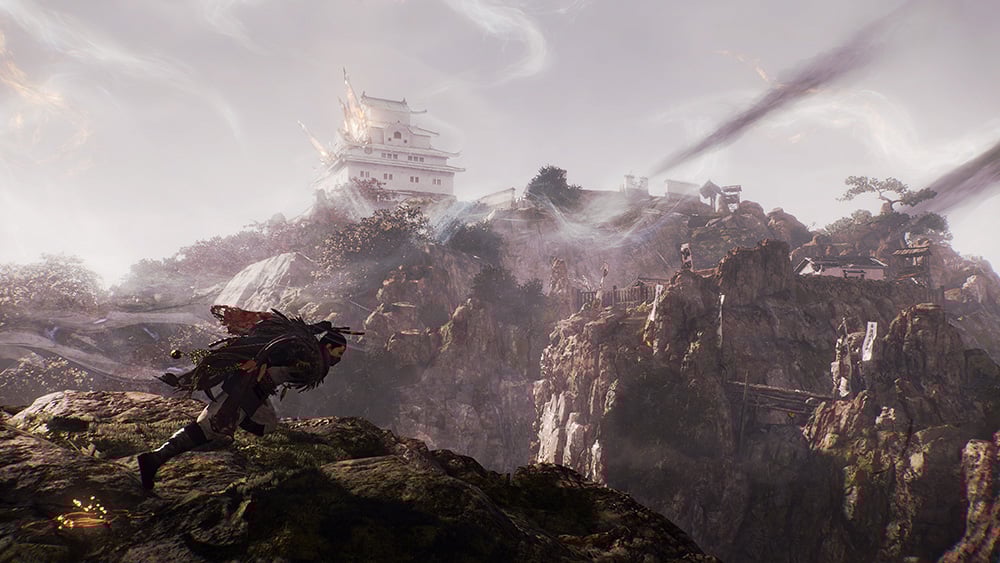
The general combat mechanics haven’t changed much from previous iterations of the game, and it’s going to feel very familiar at first. The Samurai form is what we have come to know and love with Nioh, where keeping our stamina up to continually attack with slower-ish swings that have a good chunk of power. We still have the Ki Pulse to regain our stamina, Omoyo magic, and guardian spirits to help us in our fights, and they feel as good as ever.
But that doesn’t mean we have nothing new here. The Ninja Form feels like the exact opposite of the Samurai Form. Instead of the more traditional soulslike gameplay based on slower, powerful strikes and blocking, the Ninja Form is all about faster, weaker attacks and using a multitude of tools at your disposal. The specific weapons the Ninja has, mixed with all of the tools, ultimately add a completely new way to tackle foes.
Team Ninja did an amazing job at making each form feel so different from the other, but still work together perfectly. We have the slow and steady usual style of gameplay in the Samurai form, and the fast-paced Ninja form, where we move around constantly to get ourselves in a good position to deal as much damage as we can without being struck.
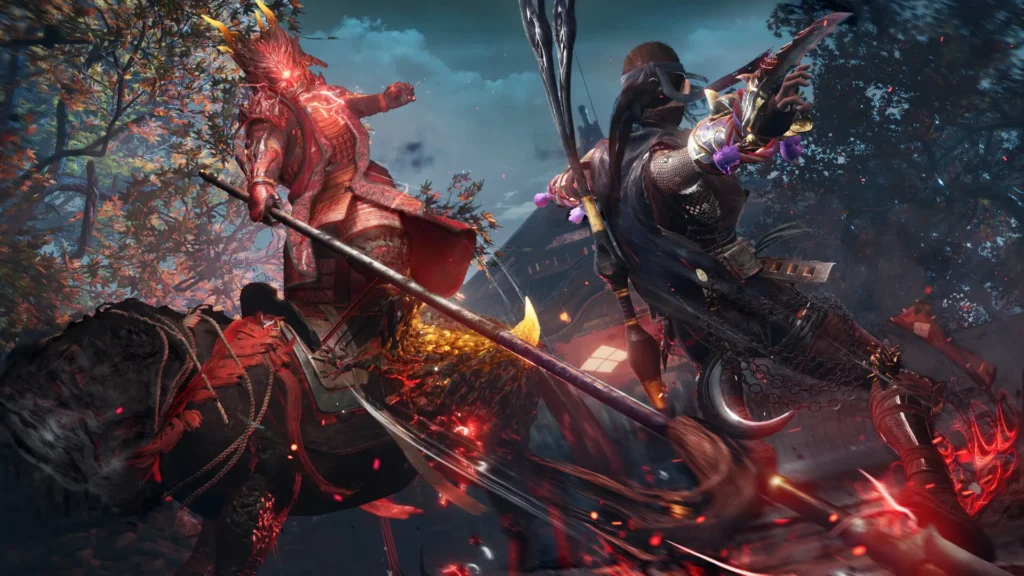
Switching between the two feels like second nature, making utilizing both forms during one fight very common. To complement and encourage this, some foes will have these glowing red attacks that can be parried by swapping forms at the right time. These Burst Counters can help a lot by bringing down the enemy stamina bar to grapple and deal some larger damage more quickly. And ultimately, these additions, along with the refined combat, elevate Nioh 3’s combat above any other soulslike I have played yet.
As a soulslike, getting stronger is going to be fairly similar to the usual. We fight enemies, get currency, and use that currency to level up and increase our stats. However, the reason the Nioh series has captivated me as much as it has is due to its loot and equipment system. There’s a ton of weapons and equipment that drops from enemies, all of which have randomized stats, substats, and even set bonuses. I am a sucker for this kind of gameplay; constantly grinding for new equipment and stronger weapons is a good time for me.
Nioh 3 takes a bit of a different approach when it comes to its world as well. Instead of the linear levels from previous entries, we get an open world to explore. It’s not as big and expansive as, say, Elden Ring, but it’s very sizable and filled with a lot of activities. We have mini bosses, finding collectibles like Kodama, Crucibles, enemy bases, and each map has a bunch of mini areas with an exploration level that can go up to give us extra stat buffs.
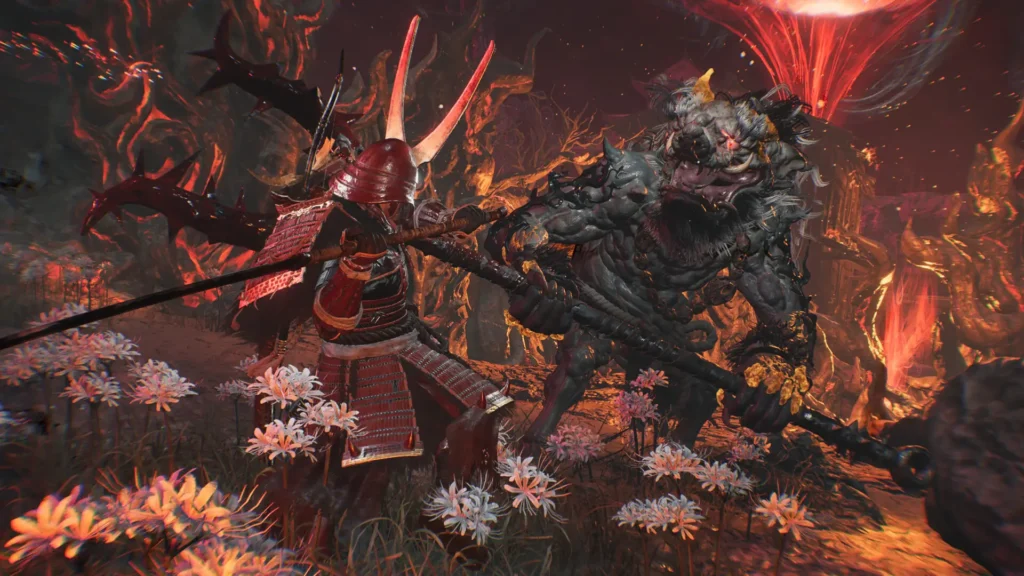
No matter the time period, each map has similar activities to do, but I had such a good time with each of them that it never felt like it overstayed its welcome. With how great combat is, I loved finding excuses to keep going around and fighting enemies, finding more equipment, and slowly completing all the activities to level up my exploration.
Nioh 3 – Steam Deck Performance
While the demo essentially confirmed this, Nioh 3 will not be a good experience on the Steam Deck. Even at the lowest possible settings with heavy upscaling, the game will regularly fall under 30 FPS, feeling unstable and stuttery just trying to get through it. For a soulslike, this is a death sentence. Trying to fight bosses without a stable framerate can lead to incorrect timing for dodges, blocks, and, in Nioh’s case, style switches. It harms the experience too much, and because of it, I would avoid playing on the Deck natively.
This is most likely due to the very obvious high CPU usage. It makes it very hard to optimize for the Deck further, and it kills performance.


On top of that, there are some videos that just won’t play, so even just trying to power through the game is going to hurt the overall experience and make it nearly impossible to enjoy.
アクセシビリティ
There is a dedicated accessibility settings tab for the game. In it, we can configure controls, change whether the Style Shift and Burst Break are separated, and how they activate, toggle Grapple and Martial Arts, change guard control and stick settings, swap horizontal controls, change vibration intensity, and toggle whether dismemberment and blood are showing. You can also change language and voice, modify subtitles, and change some audio settings.
The game doesn’t support 16:10 resolutions, but it does have cloud saves and controller support. The game does have HDR settings, and it recognizes the Steam Deck OLED screen.
結論
Nioh 3 is my favorite game so far this year, hands down. The combat is exquisite with new mechanics that complement the refinements from the previous two games, while the open-world levels fit right in with the series. The story may not be the most memorable, but the action makes up for it completely. This is now my all-time favorite soulslike, and if you have a computer powerful enough to run it, I can happily recommend it with ease.
However, you will need a decently powerful PC. Playing on the Steam Deck is a no-go, and unless it’s streaming, I wouldn’t get any hopes up about playing this on the Deck.
このレビューはPC版に基づいています。
このレビューをお楽しみいただけたなら、SteamDeckHQ の他のコンテンツもぜひご覧ください!あなたのゲーム体験に役立つゲームレビューやニュースを幅広く取り揃えています。ニュース、ヒントやチュートリアル、ゲーム設定やレビューをお探しの方も、最新のトレンドを知りたい方も、ぜひご利用ください。