
【JLPT直前対策!】1時間でJLPT N2語彙 / 日本語能力試験 N2 / JLPT N2 Vocabulary
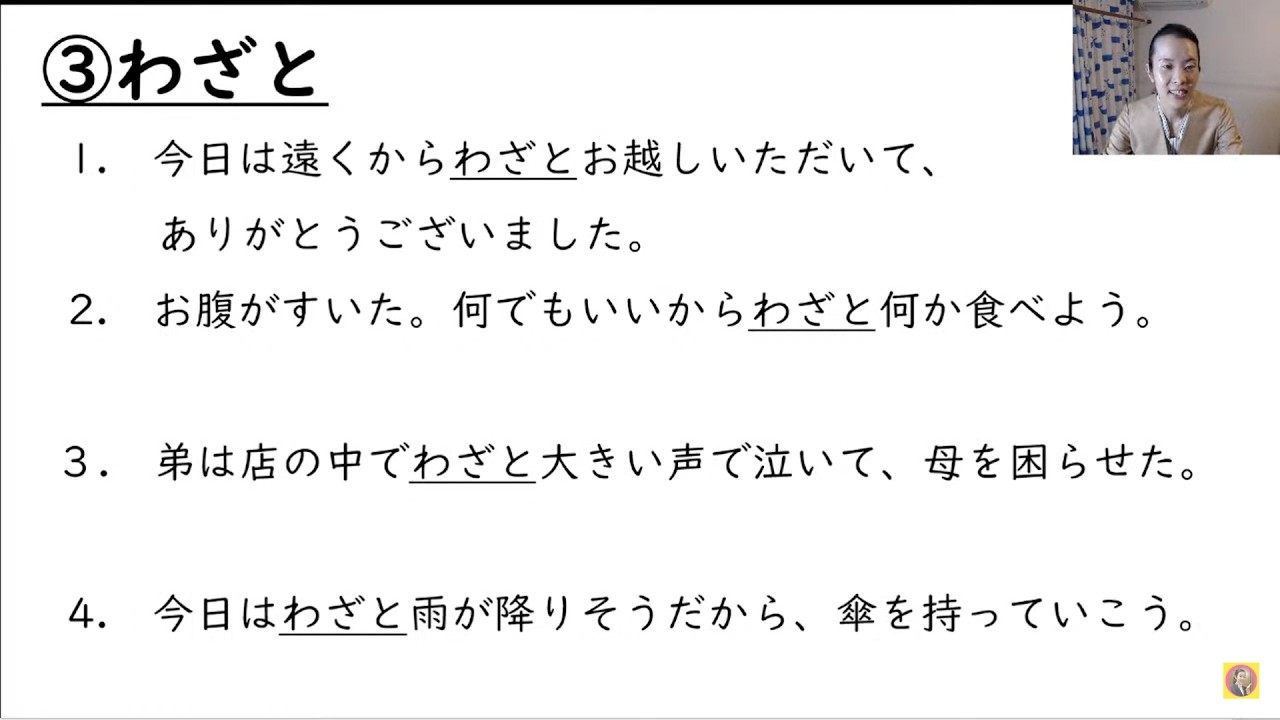
The first question is about “dot”. Everyone, please read that question by yourself once and find out which one is the circle for how to use “dot”. Please choose. Well, in English too, there’s “do com” and ” home page addresses” and “HH what is it, I can’t say it, um, gmail com com. In Japanese there is a word “do”. It’s written in hiragana. Which one is it? Well, read it by yourself and the answer is one circle. Yes, message, please chat. It’s number one, so the number one answer is number two, or number three. 4Yes, please.Wait a moment.I am.Yes, please, everyone, please think about it.Yes , I’m sure you’re all thinking about it right now.So I’ll teach you how to read the kanji.Yes, I don’t think there’s any reading written on these in the real exam.Yes, it’s called furiga.The reading is written above the kanji.I don’t think there’s anything written on them at this level in the real exam, so you have to be able to read them.Yes, but today is just practice, so here’s how to read them.I’ll show you.Just a little bit, just these two.Yes, just these.Yes, I’ll read them first.Here we go.1.My boss scolded me, saying if I eat so much, I won’t be able to finish today’s work.2.This is oil.I want to eat a dish with less oil and more fat.3.I ended up eating too much, and this is bad.Ah, my stomach is full.Let’s take some medicine.4.There are usually not many people in this park, but this is cherry blossoms.Yes, that flower, the cherry blossoms, isn’t it?Cherry blossoms.When the cherry blossoms bloom, when the cherry blossoms bloom, people come.Yes, which one is round?Just one.Answer There is only one word, “do” or “yes”. “do” means “yes”, “a lot of people gathering at once”. “Lots of people”. This is also an important word, so let’s remember it. It is also pronounced “o-sui”. “Lots” means “a lot”. It means that a lot of people gather at once. Yes , why, which one? Gathering together. So, I think it’s Joni. Joni is here. That’s right. Number 4. Yes, yes, just now. No one has written the answer for number 4. It’s only Johnny. That’s good. That’s good. Let’s go now. Number 4. Yes, Joni is number 4. Yes, the answer is yes, Joni. Okay, done. Number 4. That’s right. Yes, let’s call them first. This park is usually not very crowded. There are not many people in the park. But when the cherry blossoms bloom, they bloom. The cherry blossoms bloom. That’s right. When the cherry blossoms bloom, all kinds of people come. All kinds of people come. People come. I wrote it. A lot of people come. Right, how many cherry blossoms are there? About this much, right? Oh, the cherry blossoms have bloomed, they’re so beautiful, right? Just recently, the cherry blossoms have bloomed in Japan too, right? Yes, they’re in bloom, right? The cherry blossoms are so beautiful, so usually there aren’t many people in the park. There aren’t many people, but when the cherry blossoms bloom, everyone wants to take pictures, so a lot of people come, there are a lot of them, there’s a path here and there are lots of cherry blossoms, so in the park, there are a lot of people, these people come all at once, people come only when the cherry blossoms are blooming, that’s the meaning of “do”. Yes, and I wrote one more thing here, “do laugh”. This also comes up in N2, so yes, I wrote it, “do”, this has the same meaning, um, they don’t gather together, but a lot of people come at once, once at a time, pa, it’s something that everyone does, dot, everyone is sitting in chairs, in a classroom, students all laugh, that’s it, someone says something funny, everyone hears it and laughs, haha, that’s it, “do laugh”, that’s it, so everyone does it together at the same time, that’s it Dot, yes, it’s interesting. The meaning of Japanese is yes, let’s start with number 1. Other issues are also important. Let’s go. 1. If you do that much, you won’t finish today’s work. This is not a dot, it’s a slow one. It means slowly. It means slow. If you do that much, it’s too slow. You won’t finish today’s work . There’s still a lot left, says the boss. The boss is the person above me in the company, the person in a higher position, the person above me. I’ll scold you. He says it’s no good again. This is it. Yes, number 2. It’s oily, oily. I want to eat dotted food. Food with less oil is called light food, not dotted food. I wrote light meal. Light food. Food with less oil, yes. For example, this, this is right. Ramen. Ramen looks delicious. But this is meat, meat, and here, oh, it’s oil, so this is full of oil, so this is not light, this is light. Rich ramen is ramen with a lot of oil. It’s a soup with a lot of oil. If the soup is very oily, it’s a rich ramen. Yes, it’s delicious, but it’s oily. On the other hand, soy sauce ramen or salt ramen don’t have much oil in them. They’re called light ramen with a light soup. Yes, so they’re also called light soup or rich soup. Of course, yes, yes, well, number three is good, what is that? It also comes up in Iwa N-san’s stomach, can you see the stomach? This stomach is stacked . It’s good, please remember how to read it. I ate too much, so I ate. Eh, I did this and that, and this is also an important, important grammar. I didn’t want to eat. I didn’t mean to eat a lot, but I ate. Ah, I ate. Why did I end up eating so much? This is it. I ended up eating too much. I ate a lot. Wait, it’s not my stomach that does dots, it means I feel sick, I say I feel sick. I use the word “mukamuka”. Yes, it’s interesting. Well, I wrote 6 to star, but it also means I feel a bit sick, that ‘s what it means. I feel sick. I use it a lot. This is mukamuka, it’s interesting. It’s strange Japanese, isn’t it? It’s written in hiragana. I don’t think there is a kanji for it. Yes, sometimes it’s written in katakana, but yes, it’s an interesting word written in hiragana or katakana. Yes, I feel sick, so I say I’ll take some medicine. Yes, that’s it. Yes, this is it. It’s better to memorize them all. Nororo and asari, mukamuka moe dot. Of course, dots are also N2, so let’s memorize them. These are all words that are likely to come up by the N2 level. Yes, let’s memorize them. Now , let’s move on to the next one. Number 2. This time it’s katakana, straight, straight. Yes, there is only one answer for this too. Let’s do it ourselves. I haven’t written down how to read any of the kanji yet. I won’t look it up. I’ll look it up on my smartphone. Don’t look up how to read kanji, think for yourself now. You can’t use your smartphone during the test. Yes, choose something now. Yes, let’s choose the answer. Now, everyone please send a message here. Right now, even though many people are watching, there aren’t many chats. Everyone can send your answer. Please, please, please think about it. Now, shall we go to how to read kanji? Yes, do you understand this one? This is also important, isn’t it? It ‘s important for N2. Hmm, this is a little difficult, but it’s good to remember this one too . Yes, this will also come up in N3. Of course, let’s learn how to read kanji. Yes, it’s not that difficult. Let’s go through them all . Yes, one person has answered. Neko-san is the fastest. Yes, let’s go. What do the others think? Yes, I’ve shown you how to read the kanji. Then I’ll read it. I’ll read it. After you think about it, everyone can chat 1234, which one is it? Please let me know your answer. Yes, let’s go. 1 This map has unnecessary things written on it. dots no no poop do you understand the meaning of this this is important i’ll explain it later no no straight and easy to understand this this will also come up in N3 the show yes the show this show is about straight topics that are popular among young people right now the topic this will introduce the topic yes 3 tomorrow please come in straight clothes instead of a suit how to read it 4 he also says it straight so sometimes yes sometimes this feeling is the same as the previous feeling it means the same feeling comes that meaning so it’s not read as tsuki but as tsuki it becomes dots this is a bit special sometimes but for example people people hihitohi it is written as people peoplehito not peoplehito it is read as people yes it’s easy to have dots sometimes yes sometimes people dislike you yes so what is the answer hmm hmm a message has come thank you everyone oh number 3 ekossan ah episode 3 it says casual yeah yeah yeah oh that’s good that’s good The answer is probably something different, but please, everyone, think about it and write it down.Okay, here we go.1. Straight.Yes, that’s right.Japanese people say straight.The pronunciation is also like this.It’s a foreign language.It’s English.This is the English word.Straight.This is how Japanese people say straight.Yes, the meaning is, yes, it’s used in the sense of straight.Japanese people, yes, which one is it?Straight.Yes, yes, the answer is that.The people who just sent messages to me, like Eko-san, AleApple-san, or maybe Bish-san or BishAudit-san, that’s great, everyone, you made it with number 34.That’s great.I’ll explain number 4 first.This is a very important question, so yes, please remember it.He speaks directly, so this is difficult.Speaking things.Speaking things means saying what you think.Speaking things is quite important, so please remember it.The way you say it is difficult, isn’t it?Yes, this is what speaking things directly means.Speaking things directly, speaking clearly, speaking clearly, I I say things like , “I like you,” “I don’t like this,” or “I don’t want to do this,” clearly. No , it’s not because I don’t really like this, but “no, I don’t like that,” and I say it clearly. Yes, Japan, everyone who knows Japanese people , yes, Japanese people don’t say things very directly, I think you know that well, yes, a lot of people don’t say things that much, yes, yes, but he says things so directly that sometimes people dislike him, he says things so clearly that he doesn’t like it, he’s scared , and so on, he has a strong way of saying things, that’s what I mean, he dislikes people , it’s fine, he says things directly, that’s not a bad thing, yes, he just says it like this, it means to say something clearly, to say what you think, yes, yes, another thing I wrote is straight paper, this is also often used, Japanese people are straight, so straight paper is the same, I’m stopping it now, but the paper is straight, that’s what I mean , straight, yes, somewhere, perm, this kind of thing is perm, um, even the perm is not straight Yes, that’s right, it’s straight , they say, “It’s straight paper ,” yes, they say, “your hair is very straight and beautiful,” yes, and, earlier, you said, “casual,” that’s good, that’s good, that’s right, let’s start with number 3, are you listening, Ko-san, the kanji is Ko-san, it’s Takai-san, it’s Takai-san, the number is Makoto, the police box, the student, etc. I’m not sure if he’s from this country, but maybe Taiwan, where is he, Ko-san, where is he, Ko-san?, Ko-san is right, you’re right, number 3, what ‘s the cursor, this, number 3 means, “no suit tomorrow,” not straight, casual, it seems, casual , the opposite, formal, a suit is formal, you can go anywhere, with this, you go to work, you do your job, okay, I’m going to a wedding now, but it’s fine , don’t dress formally, come in casual, and then casual clothes, that is, jeans, yes, jeans are the easiest to understand, please wear jeans, you’re going out with your usual friends, it ‘s simple Clothes is fine That’s what I mean Not a suit That’s what I mean No Not a dress That’s it It looks casual so casual clothes By clothes I mean clothes My clothes Yes My outfit today is of course that suit Formal clothes Yes That’s right That’s right Ako san thank you Ko san Ko san Korea I see Ah that’s right Korean people also write it in kanji That’s right Thank you It’s amazing When you have a live concert it’s nice isn’t it You get messages right away Ah that’s right Ako san it’s fine It’s okay to make mistakes so don’t feel embarrassed It’s okay to make mistakes It’s okay It’s okay Yes yeah yeah Everyone it’s okay to make mistakes so you can send messages anytime It ‘s better to make mistakes because it helps you remember And yes yeah um and if you don’t make mistakes you don’t have to study anymore Yes you’re going to make mistakes now so you can study Everyone it’s okay it’s okay to make mistakes It’s wonderful It’s making mistakes um um and then let’s go one by one 1 No. This map, you understand the map, the map, there is nothing written on it, it is not written first, it means that it is not written here, this also comes up in N2, this way of saying it is a bit stiff and difficult, yes, it is a difficult phrase that is often used when writing, but the meaning is not written, and if you don’t understand it during the test and it says “not written”, it generally means “not written”, you can assume that it is not written, so it is not written, it is not written, what is not written, the map does not write, there are extra things, it also comes up in N2, this is something that is not necessary, something that is not necessary, you can understand without it, but it is written, something extra, another piece of information, that’s what it means, it does not write any extra things, it writes a lot of different things It’s not on the map, this is a school, this is a hospital, that’s all that’s written, the phone number of that hospital, no, I don’t need that information now, that’s unnecessary information, there’s a lot of unnecessary information, but it’s not written, it’s not straight, it’s simple, simple , simple, in Japanese it’s simple, this also comes up in N2, simple, easy to understand, that’s the meaning, simple and easy to understand, yes, simple, simple, please remember this, in Japanese pronunciation it’s simple, simple, simple , simple, let’s go, next, number 2, this program is of course, Nemoenu-san also does it, I studied it, the program is that TV radio program, so today from 12 o’clock, from 12 to 1, this program is the news, from 1 to 3, it’s drama Then there’s movies and then sports news, and so on, that’s the program, yes, this program is, well, what kind of program is it, it’s a program that introduces not straightforward but timely topics that are popular among young people right now, this program introduces things that are very popular among young people right now, things that are popular now, timely things, perfect timing, right now, these are the things that are popular among young people right now, did you all know, it tells you about the topic, that’s what it means, yes, there is a program like that, do you all know, among teenagers around 10 years old, this is the popular manga, this is the popular game, and so on, it’s a program that introduces those things, I don’t know anything about it, so Well, 10-year-olds do this kind of thing, this is popular, so when you go to the store they often sell it, have you seen this character, etc. That ‘s it, yes, timely. It’s the same as English , but the pronunciation is already in Japanese. Timely, timely, we use it, this is quite timely, yes, that’s a really timely topic, etc. Yes, everyone should try using it, well, I’ve just talked about it, yes, of course , but this feeling, straight, simple, timely, casual, formal, all are important, yes, N2 is important, and as you can see by yourself, in the N2 questions there are things like introductions to this program, which are already N3 words, right? There are a lot of N3 words, if you don’t understand N3, N2 I don’t understand, that’s why I’m doing the questions and I haven’t written how to read them right now, but if you think, “I don’t understand this, I don’t understand this,” then it’s often the N3 so you should study it, study it yourself one more time, try it with Mr. N’s book, okay , so up to here is okay, then let’s have a short break and since I’ve been doing a lot of classes, I haven’t talked much about myself recently, so on this YouTube channel I’d like to introduce you a little bit about who I am, well, about me, I am a Japanese language teacher, and I teach, so I am a Japanese language teacher, so I’m called a teacher, it’s difficult, teachers are no good if they can’t read, I feel, a teacher, a teacher It’s been 13 years now, and this year, 2022, is my 13th year. I’m slowly becoming an old lady, which is a good thing, and not a bad thing. I studied Japanese language education in graduate school a long time ago, and although I was young, I am a foreigner studying Japanese, so I was thinking about how to teach Japanese to people who want to learn Japanese on their own, like everyone else in the chat, not people who have studied Japanese since they were children or whose mothers are Japanese, but people who want to learn Japanese on their own. I was researching and thinking about this in graduate school. I think you all understand, but it’s a language that we’ve been using since we were children , and we’ve heard and studied it a lot from our parents, mom, dad, friends, and TV, but now that we’re adults and studying, the way we study Japanese is completely different. So how do we study to make everyone good, and how do we teach people, and what do we teach them in an easy-to-understand way? There is a lot of research being done on this, and I have read a lot of it and researched it myself. Well, after graduating from graduate school, I went to university or a Japanese language school. I have been teaching Japanese both within Japan and overseas, in foreign countries. This is pronounced “guidance” and means to teach. Yes, guidance is difficult at N2 so it’s okay if you can’t read it, I think it’s about the same level as N1. I’ve been doing this for 13 years now , so I’ve taught a lot of Japanese to people from Europe, America and Asia, so there are a lot of different kinds of people in Asia, almost all of Asia. I’ve taught Japanese to all kinds of Asian students, students from all over the world, about 2,500 people in total. This job allows me to meet a lot of different people. So it’s fun, everyone, hey, can you do this or not, what should you do? There are problems, so I’ve been thinking about them together while teaching. As for what level I taught, the levels I taught were, well, the very first , let’s learn how to read kanji, from beginner level 9 to advanced level 1, the very top, I’m teaching everything from bottom to top, that is, how to write and read hiragana and katakana, from the very beginning. There are also people who don’t understand Japanese at all, and they don’t understand very well, so I teach that to students too, so It might be a level below N5, the first one, good morning, I’m Japanese, yes everyone, and so on and so forth, and of course I have taught many people like that, um this is N, so to put it simply I have taught from N5 to the highest N1 level, and as some of you may already know, there is an exam called EJU, the Examination for Japanese University Admission, to enter a Japanese university, it’s not JLPT, it’s called JU, it’s an exam for university students, Japanese university students, to study in the same classes as Japanese university students, that’s the EJU, how much Japanese do you understand? Can you study at the same university as Japanese people ? Are you okay? How many points can you get on the test, this test, it’s impossible, whether Japanese people or I do it, oops, I’m likely to make mistakes, I get a little tired and I’m likely to make mistakes It’s so difficult, it’s even more difficult than N1, JLP, and N1. Studying at university is tough, you know. I’ve taught a lot at JJU too, so there are a lot of students who have gone on to university and are working hard, and even higher-ranking people are working, so please teach me Japanese for work, I also teach business Japanese, and this is at universities, too. Yes, it’s different from the language you study at university, business language is difficult even for Japanese people, how to use it , what to say that is rude, how to talk to your boss, how to send emails, and so on. So, from the bottom up, I’ve been teaching all kinds of Japanese to all kinds of people, and in particular, I’ve been teaching GLPT for over 10 years, and that’s I’m really becoming an old lady now, and when I think about it, it’s great, I’ve been teaching piloting, so I especially teach the N3, N2, and N1, so I’m good at it, I ‘ve taught a lot myself and know a lot of things, so let’s memorize the questions that will appear on the JLP, the question trends, in N2 terms, what kind of questions will appear on the test, on the other hand, there are questions that won’t appear on the test, of course I know, yes, there are questions that are likely to appear, yes, this is frustrating, so up until now I ‘ve made a lot of videos on YouTube, and I’m sure many of you have seen them, like dat or botto, and how do you read this, it’s no good since it’s the N2, so the questions that you make are likely to appear on the test, That’s all there is to it , so I would like anyone who wants to study for the test to definitely watch this video of me. The other day after the JLPT test was over I received a lot of messages on YouTube saying that this word appeared in my video, that they had watched the teacher’s video and it was on the test and they understood it, and I received several messages saying that they had done it, and I’ve forgotten which one it was, but I think it was this one, and I don’t know if it will come up again, but I’ve made questions using things that are likely to come up, so I would like you to watch and memorize them, make a note of them in your notebook and prepare for the test. Yes, everyone, make sure you remember how to read it, and the meaning too, it’s pronounced as ‘namiki’. The meaning is explained in the video so please take a look. What is ‘namiki’, the three kanji. Yes, and also, I teach reading in the JLPT meeting, and I talked about it in this video, but I am creating classes for N1 and N2 and I am teaching self-study reading lessons, but these are paid, not free, so I would like to talk a little about them. There are different types of questions in the N2 self-study test, so do you know what kind of questions will come up? Don’t worry, you all need to know them, you’re not good at it. There are five main types of questions: short questions, slightly longer questions, long questions, and five questions that involve searching information. In my self-study class, I teach all of them, 12, 3, 4, 5, but how should I do the questions? The actual test is short, there isn’t enough time, so how can I pass? There is a way, you have to do everything properly, you don’t need 100 points, you don’t have to do everything. So what should you discard and what should you not discard? Of course, there are also questions that take time to answer and questions that don’t take time to answer, and I teach these things to the students in my class. So what should you do in the short time before the test? That is also important, isn’t it? Before the test, you should practice a lot. That is also important. Both are taught through talking. Yes, um, there are self-study classes and reading classes for N1 and N2. They are both separate, so it’s fine . If you are currently watching the video for N1, we also have N1 classes . So what is it? It’s a video lesson. You watch the video and study by yourself. You can watch it anytime, as many times as you want. You can watch it whenever you have time, so it’s not like, “Let’s study from 10 o’clock tomorrow,” but you can watch it whenever it suits you . You can watch it as many times as you want, so I think it’s good. And all the students say that it’s really good, and there are a lot of them . They are taking classes. They can’t finish their part-time jobs on their own time, but it’s okay if they use the videos. Or they don’t have work, so they can watch the videos whenever they want. Many people say it’s fine and join, and you don’t have to buy this book, this Dokukai book , it’s okay, I ‘ll share it with you all on Google Drive, so you don’t have to buy it, it’s included in the class fee so you don’t have to buy it, I will send you the problems and you first do the problems yourself, and then you watch my video explanations, and I will do the problems like this, how do you come up with the answer to the problem ? You have to think about it yourself, so you do it yourself once, think of it as homework, and then watch the video, and there were probably differences between the way you came up with the answer and the way the teacher did it, and you see, I get it, now I know, I should do it like this next time, and you see, I was doing this slowly here, but the teacher, if I do it in this order, it won’t take as long, and so on , and so these are what we call hints, and in Japanese it’s a video that will help everyone, so when you enter the class you can see them, and so I’ve just explained a little bit, but there is a YouTube video for N2 So I have this video that says I’m starting my reading lesson, and I made it about 10 minutes long. I’m explaining about the class here, so if you’re interested, if you think you’d like to join, please take a look later after this class. I’ll have a question later, so it’s not over yet, so please take a look. You can ask me any questions. It’s a live lesson. It’s a live YouTube video. There will be a live session, so you can ask me any questions there.Yes, and in May and June, I will also be meeting and talking with you all on Zoom, so even if you join now, I will be able to talk with you on Zoom in May and June. I am always looking forward to speaking with everyone who has joined.Yes, so if you are interested, please take a look.I think it will help you with the test.It is not free, but there are only two JPTs per year, so it is money to pass the test.It is not money to go out and hang out with friends, or to buy nice clothes or nice shoes, but money for studying.If you pass, good things will await you afterwards, like a raise in your salary.Yes, part-time wages will really rise, and also your salary will rise.After that, you will have to apply for a qualification to get a better job.I have JLP N2, and N2 and N3 are completely different, so the levels will differ depending on the person, N3, and N4. 2N2 students are good. I’d like to have N2 students work at our company. Of course, every company does that, so the money is for that purpose. I don’t want you to think that it’s meaningless money. That’s why I’m working hard to make it for this class. Yes, please, there are already many people who haven’t joined yet. We are all working very hard together . Yes, you are all really serious students. Yes, please, everyone and everyone else who hasn’t joined yet is waiting. Yes, please, please take a look at this video. By the way, about this class, please see below. Please see below the video. Today’s Below this on Youtube there is a URL for application so please go there Okay then let’s go Okay then let’s do the next question Sorry to have kept you waiting Vocabulary question N is a vocabulary question Waazato Yes, this is it I’m not going to look it up now Even if you don’t know how to read the kanji, Waazato and Kawazato mean No, you can’t look it up Come up with the answer yourself Okay then let’s do it yourself Go ahead, once you get the answer everyone please chat Joni is fast 3 who is the fastest then 1 oh Joni or someone fast then only one other one is a circle so what else would be good I think it would be good Let’s write it down, shall we? Jo-san No. 1 is not on purpose, so what is the answer? Don’t use it on purpose, what is it ? Number 3 is popular, isn’t it? Yes, Ji -san, Ah-ma-san No. 3, Shanda Asis-san No. 3, everyone, No. 3, if it’s No. 3, then what is 124? Let’s think about it. Then I ‘ll show you how to read the kanji, yes, this is it, you have to be able to read all the others, you have to be able to read them all, you know, this is it, I don’t think the real test is how to read them, at this level, Joni-san, No. 1, did you bother, oh, that’s good, then I’ll read it for a bit, so please read while you do, what are the other answers, lady, let’s think about it, shall we? Let’s go, No. 1 today, eh, sorry, this is it, today is far away 2. Thank you for coming on purpose2. I’m hungryLet ‘s eat something, anything is fine3. My younger brother cried loudly in the shop on purpose to annoy my mother4. It looks like it’s going to rain on purpose today, so I’m sure you’re all feeling thisIt’s important, isn’t it? Something you use on rainy days is an umbrellaLet’s take itYes, come onYes , ShantaNumber 2, hurry upAh, I seeI see, anything is fineLet ‘s eat something quicklyYes, hurry upOh, I haven’t said the answer yet, so I can’t say it yetNumber 3 is the most popularWell then, shall we go?Yes, let’s goYes, on purposeThis is, you know, it ‘s at the N2 level and I’ve really been using this word since I was a childLittle kids often use itLittle kids often use itNot on purpose Says the little child, what is it ? Ah, Shandaste-san, number 4, is it raining ? Heavy rain, okay? Number 4, Shanda-san, one more time, number 4, please, ah, let’s go, on purpose, that’s good, that’s a good word, this is, well, I don’t get it just by reading this, sorry, people doing something on purpose, doing is the same word, what do they do, that’s right, people do it, so the problem is, people do something, ah, people, people are important, this is what isn’t people, isn’t it, it’s going to rain on purpose today, rain is not people, it’s rain, so this is definitely not, 4 is definitely not, yes, this, little brother, wow, people, I’m hungry, anything is fine , let’s eat something on purpose, this is right, I’m hungry, anything is fine I’m eating, so it ‘s people, yeah, this might be okay too. Today, I’ve purposely had people come from far away to come, and this is also important, so it means that people will come, so it’s people who will come, so this is okay too. Well, let’s go. Number 4 is definitely wrong. Number 4 is definitely wrong. Yes, let’s go. Ah, let’s go. Finally, Joni, number 2 is for now? Ah, I see, for now, you said it was quick, that’s good, Ji , Shanda, that’s good, let’s go. I wrote “for now ,” right? First of all, the answer was number 3. Yes, I’ll start with number 3. Almost everyone is right. It was great, it’s great, but it ‘s okay to make mistakes, so don’t worry, my younger brother is purposely crying loudly in the store, my younger brother is bothering my mother, this is also a little difficult to say, I learned it in N3, it’s called the perform form of “bothering”, the passive form, yes, this, my mother is bothered, oh it’s this, my younger brother is crying loudly in the store, he’s crying, uh, why are you crying, little brother, don’t cry, there are a lot of people in the store, it’s embarrassing, it’s not, my younger brother wants something, some sweets or a toy, I want you to buy me something, maybe something expensive, I want that doll, but that’s fine, buy a doll, buy a doll Mom, you already bought one the other day, didn’t you? You already have lots of dolls, don’t you? You already have them at home, don’t you? You just bought one last week, didn’t you? I don’t have that one at home that I bought last week, so I want this, will you buy it for me ? Wow, I’m crying, Mom, I’m in trouble, ha, stop it, don’t cry, my little brother says, so I think an older sister or older brother is watching, Ah, my little brother is crying again, ha, Mom is in trouble, this, my little brother, it’s probably a lie, he’s crying, no, if I cry, Mom will buy it for me, my little brother thinks, I know, so wow, I’m crying, this , this is it, I’m doing it on purpose, my little brother will cry, if he cries, Mom will be in trouble He’ll buy it for me, and then he thinks that if I cry, my mom will buy it for me, it’s scary, my little brother, he’s a bad little brother, yes, he’s doing it on purpose, my little brother, he’s not crying because it hurts, yes, it’s a little lie, he’s crying, it’s on purpose, like I said at the beginning, when I was a child I often used this phrase on purpose, I often say it’s not on purpose, for example, it’s not just me, but small children too, for example, when they fight, and they smack, smack, smack, when it hurts, their parents get angry, it’s not good, they fight and they smack people, they smack people, they hit them , you know, you shouldn’t hit them, if I tell them they can’t go, the child says it’s not on purpose, I I didn’t hit it because I wanted to, that’s what I meant, and then my child broke something. A small child broke a cup. The child broke the cup and the mother woke up. You broke the cup. You always drop cups, don’t you? You have to hold them properly, so you’ll drop it and break it, that’s not good, the child says, I didn’t do it on purpose, I dropped it because I wanted to drop it, wow, I wanted to drop it, I wanted to break it, that’s why I did it, that’s what I meant, it wasn’t on purpose , you say that often, it wasn’t on purpose, it wasn’t on purpose, I didn’t know, that’s right, so this is Japanese, the words you’re all studying in N2 are difficult, but children are already small I’ve been using it since I was little, “on purpose”, “yes”, “yes”, “you did that on purpose”, “you must have done it on purpose” , “you must have done it on purpose”, “yes”, it’s an interesting word, isn’t it? “doing something on purpose” means “crying on purpose” or “forgetting on purpose”, “yes”, “I actually have to pay the money back today”, “I have to pay my friend back the money but I don’t want to pay it back so I ‘ll forget”, “you don’t have any intention of paying me back so you must have forgotten on purpose”, “bring it back”, “for example, that’s how you use it, it’s interesting, that’s right , okay, well then let’s go, it’s wonderful, this person, those people on YouTube, everyone, when I’m talking they really stop the chat and listen to me, thank you very much Yes, let’s get started. Let’s start with number 1. Number 1, thank you for taking the time to come all the way from far away today. That’s right. Earlier, Joni wrote that, right, you went out of your way to do something, that’s right, it’s important to go out of your way to do something, it’s a strange word, it’s weird, but it’s Japanese. No, this is, you, this is a beautiful way of saying it to someone, a beautiful way of saying it that is often used to say to customers, business associates, or people higher than you. Today, you came all the way to see me, thank you so much, it was quite a long journey by train, it was hard, even an hour by Shinkansen would be fine, please take the time to come . You did a great job for me. That means you went out of your way to do something for me. Yes, so it’s thank you for coming all the way here. It doesn’t have to be thank you for coming, it could be thank you for making something for me. Thank you for making me rice balls. That’s fine, but it’s not just family, it’s someone higher up, someone higher up than you. It’s a way of saying thank you so much for going out of your way. Yes, and number two, I’m hungry. Yes, anything’s fine. Hmm, let’s eat something. That seems like it. I think it’s fine, let’s eat something quickly like Shanda did earlier. Okay, okay, anything’s fine, let’s eat something quickly. Let’s eat, I’m hungry, so let’s hurry up.Okay, but it’s not on purpose, right?Yes, it’s not on purpose.So the answer is , for example, for the time being, Joni, who you mentioned earlier, I think Joni is good , right?Joni said it, right?For the time being, right? That’s right, for the time being, it means to start with.Yes, it means to eat something first.You’ve probably heard this word “for the time being” in Japanese dramas, or by people who work part-time in Japanese restaurants, right?Customers look at the menu, they go into a restaurant, they look at the menu, what should they eat, what should they do, they want to eat this and that, but they want time to think So yes, but I’m thirsty so I want to drink something, ah, then I’ll order a beer first, please , I’d like a beer. At this time, sorry , for now, please have a beer, I say it often, for now , I mean the first thing, I say it very often, so yes, there are some foreigners who can’t speak Japanese at all but they only know for now, I wonder where they learned that word, yes, for now, for now, please have a beer, that’s it, yes, first thing, that’s the meaning, then, um, last, number 4, it looks like it’s going to rain on purpose today so let’s take an umbrella, yes, this is deliberate, rain is not a person, so I said I would never use it on purpose, yes, this was a little difficult, wasn’t it, number 4, eh, Shanda Shanda Shi, is it something, is it something, it looks like it’s going to rain today, I think that’s good, today, something, it looks like it’s going to rain, so let’s take an umbrella, yes, okay, you can use something, it’s difficult to use, um, I don’t know, it’s difficult so I didn’t write it here, Japanese people often say yes, something, when they speak, it’s like in English, um, something like like, it means something, um, it’s a word you say when you’re thinking about something, um, it seems like something is going to happen tomorrow, or ah, I don’t have a good example right now, you say it when you’re thinking about something, well, in English, well, something Like That’s what it means Yes So, yes, Shanda-san, it’s good, I think it’s good, I think it’s good, and I think it’s used quite a lot in anime and things like that, yes, that was the for the time being that we talked about earlier, probably, I think that’s true, this for the time being really appears quite often, it’s interesting , right, number 4, today it seems like something, it seems like something, ayo, it seems like this, this is also good, this seems, this is also a difficult phrase that appears in N2, something, apparently, either is fine, something is often used when speaking but not often used in writing, apparently, this is a formal, stiff, difficult phrase used in writing, yes, this one appears in that N somewhere, etc. so make sure you remember it well this doesn’t make sense after all I don’t know what it is but I think it probably means something like that yes today when I look at the sky it’s kind of bad the weather is bad so I think it’s probably my sister then let’s take an umbrella that’s what it means yes apparently probably yes apparently you probably don’t hear it much I don’t think you hear it much even people living in Japan it comes up when you read it so please remember yes apparently probably well to put it simply maybe that’s what it means yes but apparently something like that apparently something like that yes it seems yes it says yes it’s an app oh yes I think that’s fine Shantung yes Well, well, well, well, well, what do you think, everyone, well, this, let’s remember them all , for now, deliberately , it seems like this, well, well, well, how about you guys, how many did you get? There were three, well, well, well, well, well, well, well, it’s all important questions, so when you practice, like now, all like this, 1234, the answer is, well, other, for example, this is 3, even if you know the answer, then what is this, what is the other answer, what is this answer, what is this answer, if you practice by yourself, you will increase your vocabulary, so I think it’s good to practice in that way too, well, well, well, if you could only do one today, it was 0, it’s okay, you did all, you did three, of course it’s okay, If you got three , you’re still okay. Don’t think that you’ve passed the N2 exam. Yes, there are still many other questions that will come up, so that’s not all. You should study more on your own. Yes, hello, this is Japanese class. Do you know a lot of Japanese words written in katakana? Television and radio. Yes, television and radio are written in katakana. Yes, they are katakana words. Yes, they are not written in hiragana. Television and radio are always written in katakana. And then there’s camera news news. Yes, those are also written in katakana. These are JLPT N2 character words. These katakana Japanese words are also likely to come up in the test. Yes, so today I’m going to introduce 12 katakana words for you to use in the N2 exam. Yes, First I have written it here, it’s 12, there are this many, do you know them or not? Let’s check them first, okay, let’s take a look, it’s 12, let’s go, first, this one is a little small so I’ll make it bigger, let’s go with this, okay, so this is a flat tire, does it mean, okay, handle, okay, stand, claims, in front, viking course , unique, humorous , veteran , okay, it’s all written in katakana, okay, if you watch this video today, you will understand all of these meanings by the end, okay, so let’s work hard together, okay, questions, okay, I’ll explain as I go through the questions, okay, there are three questions today, okay, let ‘s do three, and they’re all written in katakana, okay, let’s do the questions and check the meanings of the words, okay , let’s go, let’s start with number 1 I’ll make it bigger, okay, a little bigger, okay, how about this? Can you see it? Yes, this is number 1. This is the problem. Yes, let’s read it. The car tire was going crazy, so this is repaired. Repair means to repair. Repair, repair. Yes, the car tire. Yes, yes , which one is better? Let’s read it. 1. Puncture 2. Handle 3. Stand 4. Complaint. Which one is better? The car tire hmm, this is it. It’s punctured. The answer is punctured. Yes, this is it. Done. Do you understand what puncture means? The car tire is punctured, isn’t it? I’ll show you a picture. Oh, it’s big, yes, this is a car. The tire is a car tire. This is the tire. A tire that is punctured is this , the air inside is said to come out. Air comes out. Yes, and it’s already broken. Yes, it’s not just that the air has leaked out, it’s already broken. There’s a hole here, it looks kind of ugly. And the inside came out Yes, this is what we call a puncture Yes, a puncture is interesting, isn’t it? Yes, this puncture comes up quite often in the JLP so it’s good to remember it Yes, car tires can get punctured Of course it’s not just cars, but also bicycle tires can get punctured This is what we say too Yes, it ‘s punctured So we say we will replace the tire We say replace, change Yes , okay, then what about other problems Number 2, the handlebar What is the handlebar What does a car handlebar mean The handlebar is here This is the part inside the car where you drive It’s this round part here You hold this to drive This is the handlebar, we say the handlebar Yes, wait a moment It won’t disappear Yes, okay, it’s a car handlebar So then what about bicycles, bicycle handlebars This is the same, you get it now, don’t you? Bicycle handlebars The first one is here, this is the handlebars, where you hold it, that’s called the handlebars, yes, bicycle handlebars, yes , let’s remember this too, the handlebars are important too, next is the gas station, the stand, this is often used at gas stations, gas station, yes, this is a gas station, the place where you put the petroleum oil in your car, this place is called a gas station, yes, this is at a gas station, this is oil, you put in petroleum, yes, it’s called a gas station, yes, no, lastly, claim, this is important, claim is important, yes, I know the meaning of claim, to make a claim or to make a complaint, this is a difficult word, it’s likely to come up on a test so you should remember it, yes, to make a claim, to make a complaint, yes, this The meaning of complaint in kanji is “kuu” (complaint), and it is pronounced “monk.” To complain is ” kuremo” (to complain) in English. Nat, this is “complain.” Yes, for example, okay, let’s make it a little smaller. Shall we make it this size? Yes, okay, wait a moment. This is easier to see. Is this easier to see? Now, let’s do it like this. Yes, complaint, what do you mean? Sorry, it’s a complaint. Making a complaint means to complain, and especially when customers in a store complain to the store staff. This is “complaint.” Now, for example, there are various kinds of complaints, but let’s have McDonald’s. They have them in all your countries too, right? That McDonald’s, written with an M. Ah, is that okay? It’s called McDos, isn’t it? I’m sure it’s McDos. In the United States, It’s a fast food restaurant, where you eat hamburgers and fries, and there are many of them in Japan and all over the world. For example, if I talk about a complaint there, for example, the staff is slow to bring out the hamburger. It’s a little slow. For example, the restaurant is very busy, so can I have one hamburger please? Customer, I ordered, I’d like one hamburger, please. But it doesn’t come right away. Oh, I ordered a hamburger and I’ve been waiting for five minutes. It’s a fast food restaurant, and I’ve been waiting five minutes. I don’t have time, hurry up. The customer says, “Hmm,” and then the customer gets angry. Yes, the hamburger is still slow, is it still slow? The hamburger is slow, isn’t it? So at that time, I say to the staff at the restaurant, I complain. I’ve been waiting for five minutes. Is it not ready yet? It’s late, sorry customer, so please go ahead and sell it. At that time, for example, the customer might say, “I ‘ve been waiting for five minutes, so do I have to pay now? ” or “Hey, wait a minute, store clerk, please say more, I’m sorry, I ‘ve been waiting a long time, you’re a bad store clerk, a store clerk, so this is a complaint, yes,” and there are many other things, but for example, when you eat at a ramen shop, there’s hair in the ramen, hair, hair, oh, this paper hair, hair, that’s it, real hair, this hair, it’s disgusting, why, wait a minute, can I have another ramen please ?” and then, for example, when the customer gets home, “I’m sorry, um, the ramen over there” There was a hair in it, right? Is the manager here? I’d like to speak to the manager. Calling the manager with flowers is a complaint. There are all kinds of complaints . Yes, in Japan the customer service is strict so it’s good that they provide a lot of very good service, so if there’s something a little bad the customer will complain straight away and call or get angry. Yes, I think you’ll understand this very well if you have a part-time job in Japan. Yes, no, that’s right. So complaints are important. So today we got this orange mark. This means it’s important, so let’s remember it. Yes , let’s move on to the next one. No. 2. No. 2 is this. Good. Yes, this is question no. 2. Yes, on my birthday. It’s my birthday. Happy birthday. On my birthday, I ate a full meal at the hotel. Yes, full. Which one would you like? Yes. 1. Twin. 2. Front. 3. Course. 4. VikingThe answer is courseFull courseHere it is called full courseWhat is a full courseDo you know?It’s fine if you already knowIt’s greatIf you know the full course, that’s greatOkay okayWell, if you don’t know, let’s learn it todayFull course, ah, maybe the picture won’t come upOh sorry, I’m sorry, there are no picturesWell, I was thinking of showing you the menu of that restaurantSorryWell, let me explainFull courseInstructor, for example, the one that is often used in English is thisIt is often used for French full course or Italian full courseYes, here, full course That means a lot in English , so for example, if you say a full course of French cuisine, there is a menu like this, but normally, for example with French cuisine, I order one fish dish today. I will only eat fish, but when you have a full course, everything is a set, so can I call it a set? First, I eat the soup, then I eat the salad, and then what is next? Well, it is called the main dish, so for example, I will eat a chicken dish, then, um, I will also eat some fish dishes, I’m full now, and finally, I will eat the dessert, and all of this is one menu. So this is a full course meal, aren’t you already full? I’ve just said five dishes, it will fill you up. This is what they call a full course meal. Yes, this is often found in French and Italian cuisine. Yes, you can eat it at a restaurant, but of course it’s expensive. A full course meal is expensive because you eat a lot. Okay , let’s move on to the next one. Brucos. So, other words, hey, the first thing I want you to remember today is this. Viking. Well, a Viking is a buffet. Do you know , buffet, Sumio, in English, is this. Buffet. Sorry. Yes, Viking means buffet in English . I think Viking is really a word that is only used in Japan. It ‘s difficult, so, hey, a word that is often used is the buffet format. What do you mean, buffet format? I’ll show you a picture of it. This is it. A buffet looks like this. There are lots of dishes, and the customers order them like this. Hold the plate and take a little at a time. Oh, I want to eat a lot of this. Next, can I just have a little of this? Choose what you like and take it. This is Japan. This is the same. All of this. In Japan, we call it a buffet. It’s a buffet style. Well, this and that look delicious. There are a lot of these too, and you can take whatever you like in whatever amount you like, or you can take a little or you can take as much as you like. Yes, let’s make it look a little bigger. This is a photo. I’m sure there are buffets in your country too. Yes, buffets are common, for example, right? Hotel breakfasts are breakfast. Breakfast is often in the form of a buffet. Yes, buffets are common, yes. There are a lot of buffets in Japan and in the foreign countries that I know there are a lot of buffets too. Choose what you like and eat it. Yes, yes, it’s called a buffet. Remember that. In Japan, there are many buffet restaurants. And then there’s twin, which is a little easier. The English word for twin is twin. So, the one that is often used is , a little small, a twin room, a room for two people in a hotel, a little small, a room for two people, yes, a room where two people stay, it’s called a twin room, yes, in Japanese it’s actually pronounced as twin and twin, yes, the opposite of twin, what ‘s a room for only one person called, only one person stays , this is the same as in English, I think it’s single , so in Japanese it’s called a single room, single and single, yes, a hotel room for one person, this “you” is for one person, a room for one person, it’s pronounced as “you”, “yue … Front also means “front” in English, but in Japanese it means “front desk”. It’s “reception”. So in Japanese it’s “reception”. Japanese people say “front desk”. It’s a little different from the English meaning, so it’s difficult. It’s “reception”. So, the hotel front desk is often mentioned. When we say “hotel front desk”, we mean the reception desk of that hotel. It’s the hotel reception desk, so for example, please come to the hotel front desk at 7 o’clock. Please come to the hotel front desk at 7 o’clock. This doesn’t mean in front of the hotel, outside the hotel, not in front of the building, but the hotel reception desk. It means please come to the hotel reception desk at 7 o’clock. Yes, Japanese people say, “yes, please be careful”. When you meet up with friends, you go to the front desk, don’t go outside the hotel, outside the building, in front of the building, no, different, the reception desk, please be careful. So, first of all, yes, it’s important, but the one that seems a little difficult and is likely to come up on the test is “full course”. After all, full course and buffet, let’s remember these words. Well, twin and single, right?Okay, so this is the last question, number 3, so do your best.Yes, here you go.I want a chair with this design.A chair is a chair.A chair to sit on.A desk chair.A chair.1 . Humor.2. Unique.3 . Rhythm.4. Veteran.Which one is it?Yes , the answer is number 2.Unique.This is it.Yes, let’s start with humor.You all know what humor is, right?Actually, this is N3, isn’t it?I’m sure.But I thought I’d study it one more time, so I put it in.Let’s review.Humor is this in English, isn’t it?Humor.Humor means interesting.So, the way to use it is to say that Tanaka-san has a sense of humor, or that Tanaka-san is a person who has a sense of humor.This is it.Okay, yes, there is humor, it’s often used.So, a humorous chair with a design is not possible.This is not possible.Humor is not humorous, so humor is not good.Yes, the answer is 2.Unique.Unique is also important.Unique is a word, uh, this.It means that it is read as unique.Unique, this is unique, and it means that it is not the same as other.Other Not the same as something Not similar Not the same In English it’s this, yes, for example, let me give you an example Unique Actually, yes, unique Na is Nakayoshi This is Nakayoshi Yes, this humor is that business card, that’s a business card. Whether it has humor or not, you say it has humor, yes, no, there is no humor, unique is Nakayoshi, unique , Nakayoshi, lively, famous, the same, unique, distinctive , not the same as others, so for example, if you say you want a chair with a unique design like I did earlier, that means this, this is a chair, it’s rare, isn’t it? You don’t see it very often, you don’t see it often, it’s this, this, it ‘s the same chair, it’s cute, isn’t it rare, interesting, it’s unique, you’ve never seen it much, special, this is unique, it means there isn’t much else, so, as I wrote here, the meaning of unique is not the same as others, it ‘s not the same as the chair, the chair you just said, a rare chair That’s right, so this is the design. It ‘s an English design. So, for example, let me introduce some other examples. Unique, unfortunately, you can’t see it. I wanted to show you a picture of a unique chair, but it’s not coming up. Sorry, I can’t see it today . For example, a unique design. Let me show you other examples. When I say unique, I mean unique something. For example, a business card. Here is a business card. For example, a uniquely designed building or building. Building, building, clothes, clothes, clothes, cup, drinking cup. Top, a uniquely designed building. All are fine. And for example, this is also a unique way of thinking. Unique thinking. Yes, for example, Ray. Mr. Tanaka always has a unique way of thinking. What does it mean when you think about something uniquely? Mr. Tanaka thinks, how do you think about it? It’s not the same as other people. It’s a little different. It’s not the same as others. It’s unusual. That’s what I mean. He has a unique way of thinking. And another unique idea. The meaning of the idea is Flavor is ideas, ideas, ideas, ideas, we say come up with an idea, this might be good, it’s something that pops into your head, ideas, for example, children have more unique ideas than adults, children are more unique than adults, interesting, unusual, unusual ideas, they have unusual ideas, they come up with ideas, that’s what I mean, they have unique ideas, they have unique ideas, children are interesting to think, aren’t they, they’re amazing, they sometimes think, “how did they come up with such interesting things, adults are stubborn, so they say they’re stubborn, right, so this was unique, um, unique, um, important , it’s difficult but important, let’s remember it, humor is unique, that’s the end , two more things, rhythm, rhythm, rhythm, rhythm , this is English rhythm, but pronunciation, in Japanese it’s called rhythm, rhythm, yes, it’s important, let’s remember rhythm, how to use rhythm, let me introduce it, this is ray , music, music, dance to the rhythm of the music, dance, dance Let’s dance. We dance to the rhythm. Yes, for example, let’s say it’s a song. We move our bodies to the rhythm of some music . By “to the rhythm ,” I mean along with the rhythm. Along with the rhythm, the rhythm, yeah, I’m not very good at it now, but I’ll dance now. For example, yes, we’ll dance to the rhythm. Yes, finally, veteran. This is the last one, but it’s a little difficult but important. Let’s go. Veteran. If you don’t know what it means, let’s learn it today. A veteran can be anything. It refers to someone who has been doing something for 10, 20, or 30 years or so. So they are very good at something or know something very well. A person is called a veteran. It’s written in kana. Veteran. Yes, so for example, Oisho, I’m going here. This is Ray. A photo of Veteran. Oh, I can’t find a photo of Veteran. What a shame. Actually, well, I’d like to show you a photo of Veran. Please wait a moment. Yes, sorry, the photo disappeared so I’ll make another one. Yes, I’ll explain it again. Now, he’s a veteran. A veteran is someone who has been doing something for a long time, whatever it may be. He’s very good at it. So, Ray, I’ll show you a photo. This is it. I’ll enlarge it a little. Is it too big or not? Wait a minute, it ‘s too big. Okay. First, this is a taxi. Japanese taxis. There are a lot of black and yellow taxis in Japan. Yes, a person who drives a taxi. A person who drives a taxi is called a taxi driver. Okay, wait a minute, let’s go. A person who drives a taxi. It can also be called a taxi driver. Either is fine. Driver comes from English. Driver is good, so this job, this person, for example, has been working as a taxi driver for 30 years. So , this person is a veteran taxi driver. A veteran. Well, did I write it here? A veteran. Someone who has been working as a driver for 20 or 30 years. That person is a veteran taxi driver. Yes, so a veteran taxi driver 33 We often say to that person, “You’re a veteran taxi driver, so you know the roads well ,” or ” You ‘re a good driver , ” or ” yes … Mr. Yamada is, you know, anything is fine, Mr. So-and- so is in this field, field, field, this field, Mr. Yamahana is in the field of fishing, anything is fine, I mean a veteran in such and such field, a skilled person, I say a veteran in this field, a veteran in fishing, or a veteran in cooking, it’s fine too, yes, I’ll use it, yes, but this is easier and I think it’s good to remember this first, a veteran of such and such, a veteran doctor, etc., yes, so that was the last one , I explained, yes, um, earlier, humor, sorry, the humor photo has disappeared so I’ll wait a bit I’ll only show you one humorous piece here. I want a humorous chair. I have other pictures of this humorous piece so I’ll show you this one. Sorry, not Yuma. Unique. Sorry, I made a mistake. A unique design. Um, you’re saying it’s rare, right? There’s nothing else like this. This is a rare chair. This is nice. A unique design chair. I’ll also say this. Yes, this is a Japanese class. In this video we will study JLPN2. Yes, I’ll give you questions like this. The kanji in the red part are 1, 2, 3, 4. Which one is it? Think about it. The answer is 2. Yes, today we will have five questions on how to read kanji like this. 5 questions. Yes, before that, I’ll introduce myself. I’m Japanese. I’m a Japanese teacher. So, let’s try five questions. After you answer five questions, I’ll explain. Good luck. Now, please read. Stand on the stage and speak. 1 Center 2 Center 3 Thio 4 Thio The answer is 1 Center Center Next Read What is the new question 1 Living Tongue 2 Arising 3 Arising Tongue 4 Sincere Tongue The answer is 2 Arising Arising Next Read I put my old bicycle in such and such a place 1 Storage shed 2 Butch 3 Property 4 Warehouse is 1 Storage shed Storage Next Read I told my friend about something from long ago 1 Worries 2 Hopes 3 Worship God 4 Story The answer is 1 Worries Worries Next Next is the last question Read I was confident that my house had been damaged by something 1 Damaged 2 Echoes 3 Tilts 4 Kei The answer is 3 Tilts Tilts Yes So how many have been completed? Yes Well then I will explain So the first one is standing in the center of the stage and speaking This is the stage It is also called a stage A stage A stage is a big place, a wide place A higher place where everyone listens to the story A stage and I will say it. I will stand in the center of the stage and speak. This is the center. Center, center, center. By center I mean the center of the stage. This is the center. I will call number two again. Center, center. Number three, chuo, chuo. Number four, cio cio. This is center, center, center. Yes, I said a lot . Yes, next. Number two, a new problem has arisen. Arrived. Arrived has the same meaning as occurring. In English it’s something like eight minutes, right? And here, new means new. A new problem has arisen. That’s what I mean. Some new problem has arisen . New is a slightly nicer Japanese word. New is a slightly nicer Japanese word than new. Yes, other places. Number one, living, living, living . That’s right. It feels like it’s living, so um, you cut the hiragana here, so here it’s fine, the meaning is good, it’s alive, it’s alive, this is it, to bu, number 3, raw tongue, raw tongue is also raw, this feeling, raw, yes, raw vegetables, vegetables, if it’s vegetables and raw, it’s raw, this raw vegetables, not raw vegetables, raw vegetables, well, cut up vegetables and eat them as they are, for example, stir fry in a frying pan with oil over a fire and cook something using fire, no, you eat them as they are, for example cabbage, lettuce, tomato, you can cut them up and eat them as they are, they’re raw vegetables, so let’s eat raw vegetables, they’re good for your body, so they’re called raw vegetables, yes, I didn’t write it but raw fish, fish, fish, raw fish, sashimi, sashimi , that’s raw fish, not raw fish, raw fish, raw fish , it has dots on it, yes, at that time It’s raw, but like here, if the hiragana is written as ‘ji’ then it’s small ‘ji’ and the reading is 4th, ‘Makoto’, this is also completely different, yes, next, number 3, a storage shed, you know the kanji, right? So this is something you put away, right? So this is where you put your luggage, you put it here, you put it here, ‘okimasu’, and the reading is ‘okidesu’, and a storage shed is this, this tree, in Japan, um, in the garden, it’s a little small, but generally it ‘s a place with about two doors, a box, you can imagine it as a big box, and you put things you don’t use there, yes, so here is also that bicycle, right? The bicycle is in there, right here, so when we say ‘put away’, we put it away, the mass type means ‘put away’, the meaning is ‘put away’, we put away, yes, ‘put away’, and Well actually, well, this number 4 is a warehouse, there is a warehouse, is there a correct word in Japanese? Do you understand? A warehouse is this, a warehouse is very large , but what is it, it’s a building, but it’s not an office or anything like that, inside the warehouse, like this, there are various products for sale, and this, um, this is called a warehouse, warehouse, yes, this is inside the warehouse, yes, um, we went to number 4, if we take a look at the others , number 2, but, this is also completely different, number 3, this is also different, this feeling, when it’s the second, it’s also called a storage shed, storage shed, yes, let’s move on to the next number, number 4, I told my friend about my long-standing worries, worries, this, worries, worries , what does it mean, what does it mean, worried or troubled, It’s something that worries me, I think everyone, everyone, everyone has at least one worry, anything is fine, this is really an example, if I were to give an example, for example, for example, for example, for example, whether you’re a man or a woman, what should I do about my hair, my hair is getting thinner and thinner, and they say it’s falling out, and then they say it’s thinning, and it’s worrying, isn’t it? It’s unpleasant, isn’t it? Oh, my hair is falling out, it’s unpleasant, and this, this is one worry, but, um, that worry can’t be easily fixed, those kinds of unpleasant things, your own heart , and the things that make you feel bad are worries, yes, there are all kinds, um, I had a fight with a friend, um, one more time, one more time I want to be friends with you, but I don’t know what to say and say I’m sorry, or something like that. I’m worried. Yes, what should I do? What should I do? That’s one worry, and I have many worries. It could be about my body, for example, for example, for example, I’m like, this here is dirty, I hate it, oh, I really hate it, even if I put on makeup myself it doesn’t look pretty, oh, I don’t like it, this is a worry, or something like that. That’s also a worry, for example, there are many worries, I have worries , I’ll say it too, this worry is a business card, the same word is worry, I’m worried, no, I look at the other feelings, number 2 hope, hope is like this, I hope for something, I want to do something, that ‘s what it means, number 3 worship God, worship God, this feeling is difficult, but this is the feeling of N2, so let’s remember it if we can. Bow means I will bow, this feeling, I will look, I will look, I will look, I will look, no , first worship God, masu means this bow, I will bow, God, God, God, in front of God, it’s fine , even for God, it’s fine, I put my hands together like this, God, please I will do it please this is sweet please this is I will pray I will pray yes um I will pray to god and there is another thing that Japanese people often do when they make a request to someone sorry please for example yes I have plans today so I have to go home early sorry um can I go home to work earlier today please I will also pray I often do this hand I will pray it means to make a request yes so I will pray I will pray I think it’s okay to remember it I will pray and number 4 is the N1 so it’s difficult um you don’t have to force yourself to remember it I will look at the jokes that mean for example my friend is very good at studying ah it’s nice for example what is that E Rin Rin understands kanji better than me and JLP faster than me I want to pass N3 no no no I study a lot but I can’t pass Rin is lucky you are lucky I will look at this joke I envy envious nice or for example another one is ma then Rin is fine Rin has a boyfriend So I don’t have a lover, Rin-san has a lover but I don’t have one, Rin-san is lucky, I ‘m jealous, yes I’m jealous of Rin-san, I’m jealous of Rin-san, but I’m jealous because it’s N1, you don’t have to force yourself to remember it, okay, let’s move on to the next one, number 5, this is the last one, the house tilted because of the earthquake, it’s tilted, this, it’s tilted, it’s tilted, mask, it’s tilted, this, you get it, tilted, the house is not straight like this, it’s a little bit tilted, this means it’s tilted, of course a little is fine or a lot is fine, it’s not straight like this, it’s tilted, yes, this is difficult, if you have confidence, there are cases where the house will tilt, the next other word, hurt, hurt, this is also N1, the hurt wounds are this, the hurt wounds are this, this , this, the floor, the flooring, the place where you walk, everyone’s house, the place where you walk, the floor, this, the floor, this, the flooring, here, for example, a chair, your chair is It moved with a “gaga” sound , and now it has a scar, it has become dirty, and this is what we call a scar. It’s a scar, it’s hurt , this is it, yes, but that’s N1, then the next verse, resonating, this is N2, 2, resonating, the kanji is like this, resonating, resonating, for example, this, do you know the name, this is called a tunnel, it’s written in katakana, tunnel, tunnel, I think they’re in every country, when you walk through a tunnel, when you say “yahoo yahoo” in a loud voice, the voice becomes “yahoo yahoo yahoo yahoo,” and the voice gets louder, right, this and this are the same, if you say “panpan” the sound gets louder, this is the sound resonates, the sound resonates, when the sound gets louder it resonates, yes, and the last verse, 4, kete, this K is e kanji, this kanji, kanji, feeling, when they’re used together it becomes K, it’s pronounced K, so that K , but today’s question is that hiragana, here, it’s just one kanji, so at that time it’s pronounced “tilt”, yes
JLPT N2 Vocabulary 語彙【テストの練習問題/Practice Questions/Exercise】をします
😊nihongo class【Online Lessons】
Link→ https://nihongoclass-home.square.site/s/shop
🐤X Twitter https://twitter.com/nihongo_class
😊わたしは・・・
・日本人 日本語教師 Japanese language teacher
・東京弁 My Japanese is Standard language
・大学、学校で教えています。16年目(2025年現在)
・英語、ドイツ語 わかります
▼JLPT N2 Vocabulary|JLPTにでやすい語彙の使い方 練習問題
▼【JLPT N2 Vocabulary 語彙】練習問題
▼【jlpt N2 Vocabulary 語彙】JLPTによく出る語彙!
▼【JLPT N2 Vocabulary 語彙】テストのための練習問題
▼【JLPT N2 Vocabulary & Grammar】N2 Pretest, テスト前の練習問題
▼【JLPT直前対策!】JLPT N2 Vocabulary 語彙問題
▼【JLPT直前対策!】JLPT N2 Vocabulary 語彙問題
😀このYouTubeで 日本語が 勉強できます
Link→www.youtube.com/@UCvmIYX4s_ipJso_QrfivoRA
#jlpt #日本語能力試験 #n2 #japanese #jlpt_n2 #jlpt_n2_vocabulary #nihongoclass
👂おすすめ:Japanese Podcast
▼巨大地震は1週間以内にM8か|Authorities in Japan issue alert for “Megaquake”
▼ビジネス電話の話し方|敬語
▼日本人の仕事の悩みランキング https://youtu.be/Yrny1Y_F57U
▼日本人の敬語の生活は、中学生から始まる
▼【ビジネス日本語】電話の受け方|マナー
▼jlpt N2 N1 Reading 読解 ニュースを読む:日本 夫婦別姓
00:00 もんだい①
もんだい②
もんだい③
Online Video Lesson
4 Comments
😊nihongo class【Online Lessons】
Link→ https://nihongoclass-home.square.site/s/shop
🐤X Twitter https://twitter.com/nihongo_class
😊わたしは・・・
・日本人 日本語教師 Japanese language teacher
・東京弁 My Japanese is Standard language
・大学、学校で教えています。16年目(2025年現在)
・英語、ドイツ語 わかります
待っています
3
独特 to 特定の違いはなんですか、先生?