
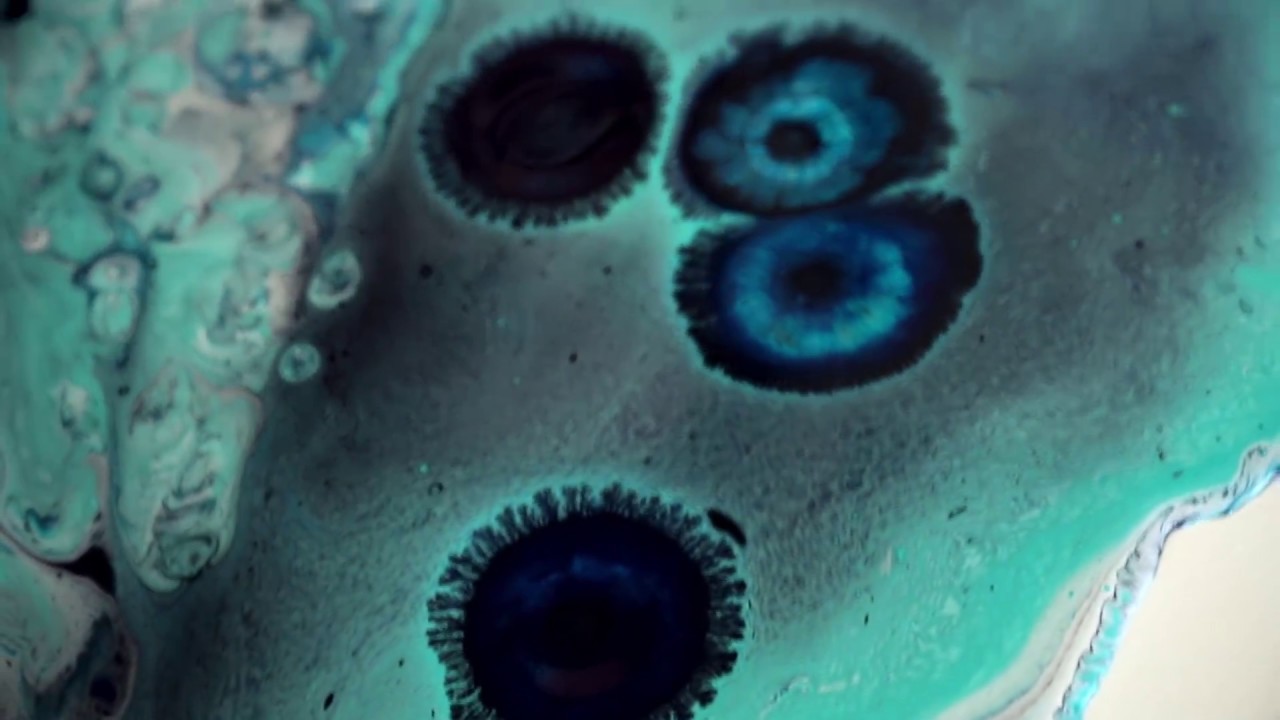
Get your recipe books ready and start cooking up your own unique acrylic pours!
For a full list of materials visit http://opusartsupplies.com/acrylicpours
–
Join Camille & Erin from Opus Langley to discover the versatility of paints, pouring mediums, and additives while learning about professional-grade alternatives to the trending non-archival methods for acrylic pours.
Learn how paint viscosity and density plays a major role in how your colours settle in the final pour and get ready to have some fun creating these exciting abstract works of art!
We invite you to watch Introduction to Acrylic Pouring above to learn easy recipes that you can use to launch straight into your own creative practice and begin exploring.
–
Featuring
Camille Welsh
https://www.instagram.com/cjpwelsh/
Erin Martens
https://www.instagram.com/erinmartensart/
Produced by
Opus Art Supplies
http://opusartsupplies.com/
Created by
Ryan Mund
http://www.rymu.ca/
Music by
Dan O’Connor
“Sky Seeds – Chillout Mix”
http://danosongs.com/danosongs.com-license.pdf
22 Comments
😍👏👏
Good video but I still have a question. Do I need to use gesso? I noticed you were using wood canvas but I'm assuming I will need gesso depending on the type of canvas I use?
You had some useful information for people new to pouring but you’re also showing very bad habits. A good medium will dry clear, not give a cloudy effect. Why would you want a medium that dulls the colours? The video didn’t show any base coat being used on the canvas. If you check the other artists you’ll see that they use a base coat 95% of the time. A base coat allows the paint to flow easily and gives more control over the paint. If you don’t have a base coat it means you use a lot of very expensive paint and the coloured paints start rolling over each other. That is dreadfully wasteful.
You’re wasting an awful lot of paint over the sides of the canvas! Artists generally have enough respect to not waste expensive paints and mediums!
When pouring it’s not a good idea to drip all over the canvas because the drips are magnified when you tilt it. You’re allowing hundreds of drops to spoil the patterns. Many artists are annoyed if there are one or two drops that spoil the flow. You should have something under the paint to catch the drips and use them outside the paint mix to make it easier to flow.
It’s also really important to torch the paint so that the air bubbles come to the surface. Torching pops bubbles you can’t see. If you just use the palette knife to poke the big ones you’ll miss some, and the bubbles will come out later as white spots.
I can see why people might think it’s an informative video, but some of those tips are very poor practice. Stirring the paint with a palette knife with a narrow end is also ridiculous. You need a flat stick or implement, or at least a long, straight edge palette knife to make sure it’s stirred up properly. You can actually see the white pouring medium hasn’t mixed properly as there is medium on the inside of the cups.
Torching and tilting causes cells to appear. You tilt from side to side and top to bottom if you want to keep the cells round. It takes time and skill to do this. You’re not even showing inexperienced how to tilt. Tilting stretches the cells. I don’t know of any pouring artist on YouTube not torching.
This video was really one big advertisement for additives and your own brand of paints.
After a newbie has some experience they could come back to this video and realise how many shortfalls there are in it. Guaranteed.
Thanks for the video! Just started pouring. Question…do you need to sand a little of the surface on pre-gesso wood panels? I know you do for encaustic but I also know that’s way different
Thanks for the tutorial
Why the fuck this thing is in a pink floyd list
Very nice video! You both did a great job presenting this. Thanks for all of the great info!
Do i need to prepare the canvas any specially if i am using only floetrol as a pouring medium BEFORE i varnish??
The link for the materials list doesnt work anymore. Can we get an updated version?
Thank you for finally explaining HOW to do this instead of just showing the pour and not explaining how it works and what the materials you can use are and how they work. I must have went through 20 videos.
Can I put a couple drops of alcohol into the poured paint for the same dispersed effect?
What to do with leftover paint
Wet latex paint can be hazardous, so dry it up. If there's only a small amount of paint in the bottom of your can, leaving it out in the sun should do the trick. If there's a bit more than the sun can handle, try adding kitty litter or newspaper to help soak up the paint and speed the drying process.
Check your local laws, but in many locations, you can throw away dried-out paint with the rest of your household trash.
Your safest bet, however, is to think of all of your paints and mediums as potentially harmful, and to treat them equally. Paints labelled non-toxic are considered safe for humans, but are not necessarily safe for the environment. Propylene glycol, for example, is safe enough for use in the food and cosmetic industry, but has a disastrous effect in aquatic environments, meaning that pouring acrylic waste water down the drain is damaging to waterways.
And remember that those plastic paint cups will be around for over 2,000 years, long after you and your art no longer exists. Use paper cups.
How long does it take to dry or cure? Is there a difference for those two words ?
Thank you for sharing 😊
Hmmm…rubbing alcohol…gonna try that 2moro…thanks girls !
Are you able to provide a list of the products used in this video?
Thank you for explaining the different paint pouring techniques with the recipes. For the rubbing alcohol technique is it safe to use 91% isopropyl alcohol instead of 70%? Would the effects be different? Thank you.
can you use for example use 0.5 Oz and make 2 different paintings?
What size canvases are you using for this amount of paint? Would it be too much for 8×8 canvases?
omg..
watched hundreds of acrylic vids..
some are helpful in some areas..
you literslly explained allllllll the basics..
ty
So cool thanks for the demo
Which white paint do you use